200 Episodes Later: The "Leadership Scorecard" Every Dog Owner Needs to Know
Can you believe it?
200 episodes.
If you’ve been hanging out with me for a while, you know that this journey hasn’t always been easy.
In fact, there were times early on when I felt completely overwhelmed.
Conflicting advice, stressed-out dogs, and that nagging feeling that I was somehow failing them.
Sound familiar?
Maybe you’re there right now, feeling like you’re doing all the things, yet still struggling with a dog who is fearful or reactive.
Well, friend, for our 200th milestone on the Beyond Obedience Podcast, I wanted to swing all the way back to the very beginning.
If you want to listen to the episode, you can find it here on Apple Podcasts.
I want to talk about the greatest lesson I ever learned.
It didn't come from a textbook or a fancy certification.
It came from a dog named Wellington.
The Legend of Wellington Gray Bear
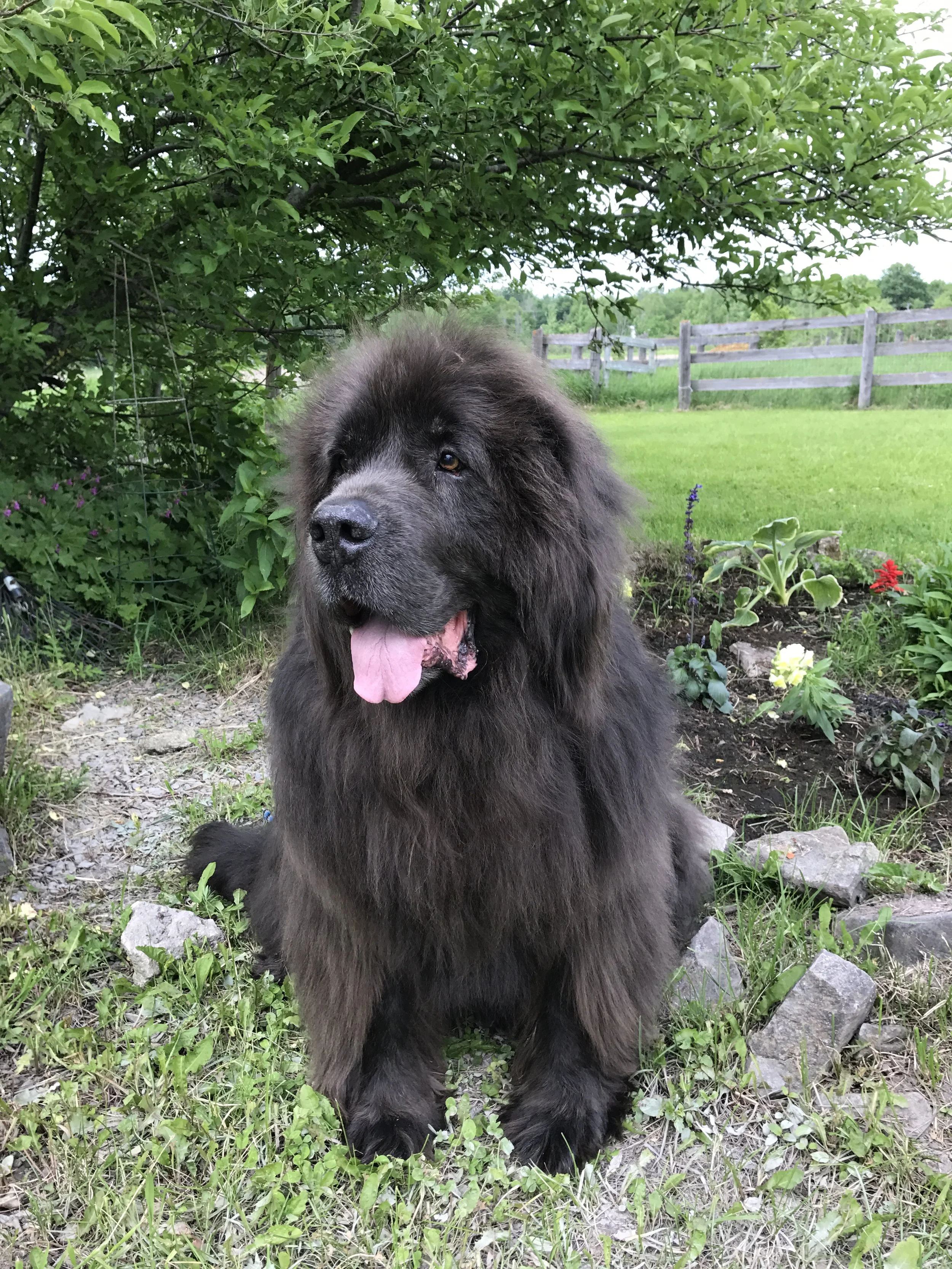
Wellington was a teacher like no other.
He didn't care about my titles or my "training" tricks.
He invited me into his world, and in doing so, he showed me what leadership actually looks like in the dog world.
And spoiler alert: it’s not what most people think.
I used to share this idea years ago, back when I had a brick-and-mortar business in Ontario. I called it the Leadership Scorecard.
At the time, I was surprised by how well it was received.
I think it’s because as humans, we like to have something tangible.
We like to know if we’re "winning" or "losing."
But the truth is, this scorecard isn't about judgment. It’s about awareness.
So, What Exactly is the Leadership Scorecard?
Imagine a fictional scorecard that is being updated every single time you interact with your dog.
It’s incredibly simple. Every time you do something with or for your dog, ask yourself:
"Was that my idea and the dog followed through, or was it the dog’s idea and I followed through?"
If it was your idea (e.g., you asked them to move so you could sit, or you initiated a walk), you score a point.
If it was the dog’s idea (e.g., they nudged your hand and you petted them, or they pulled you toward a scent and you followed), the dog scores a point.
I can almost see your face dropping as you calculate the scores from this morning. 🐾 Don't worry. I’ve been there.
It’s not about getting all the points and giving the dog none.
It’s about recognizing that this scorecard only comes out when you really need it.
It comes out in those high-stakes moments.
Like when a squirrel darts across the path and you’re asking your dog to choose you over their in- stinct.
If your dog has been "winning" the scorecard all day, why would they choose to follow you in that moment?
They won't.
They don't believe you have what it takes to lead because, in their eyes, you’ve been following them all morning.
The Game Your Dog is Playing (With or Without You)
Here is the "Gentle Contrarian" truth:
Your dog is playing this game whether you realize it or not.
They aren't being spiteful or dominant. They are just being dogs.
Dogs are constantly gathering data about us.
Are you predictable? Are you clear? Are you safe? Are you a partner in survival?
They start testing this the moment they are puppies.
If one puppy jumps at another and the second one backs up, the first puppy just scored a point. They got the other puppy to move their feet.
When your dog jumps into your space on the couch and you shift over to make room? They just got you to move your feet.
Point: Dog.
They aren't judging you, they are just learning who you are.
And if you want to help a fearful or reactive dog, you have to be the person worth following.
Reactivity Work Doesn't Happen During Reactivity
Are you exhausted by the constant "management" of your dog's reactivity?
Do you feel like you’re always on high alert, scanning the horizon for other dogs?
I have a bit of a secret for you.
You don't work on reactivity when your dog is being reactive.
In that moment? You are just managing.
You’re surviving.
The real work: the deep, trust-building, life-changing work: happens in the quiet moments. It happens when:
Your dog follows you to the kitchen and you tell them to stay back (and you actually wait for them to do it).
You’re on the couch and you claim your space instead of letting them crowd you.
3. You get up in the morning and you set the tone for the day before the first walk even happens.
If your dog doesn't believe you have what it takes to handle the couch, they certainly won't believe you can handle that "scary" dog down the street.
We often ask, "Why isn't my dog listening?"
But what if we asked, "What am I showing my dog about me?"
Beyond the Cookie: Transactional vs. Survival
I see this all the time in traditional training.
"Sit. Get a cookie." "Down. Get a cookie."
That’s fine for learning tricks, but it’s transactional.
Wellington never gave another dog a cookie to get them to move.
He used his presence, his angles, his speed, and his transitions.
He was a partner in survival.
Many well-trained dogs: dogs that can sit and stay on a dime: still don't trust their owners in a crisis. Why? Because the relationship is built on treats, not on a deep understanding of leadership.
When things get "lifey" and the pressure is on, your dog isn't looking for a snack.
They are looking for a leader.
They need to know that you've got this so they don't have to.
Imagine a Life Without the Stress
Imagine walking out your front door with a dog who is checking in with you instead of scanning for threats.
Imagine sitting in your living room feeling a sense of calm because your dog finally feels safe enough to relax.
It’s not just about obedience; it’s about trust. 👣
It’s about moving beyond the "sit" and into a partnership where you and your dog are truly in sync. It takes time. It’s not as flashy as a quick-fix training collar or a pocket full of hot dogs.
But it’s the only way to get lasting results with a fearful or reactive dog.
Your Step-by-Step Path Forward
If you’re ready to stop the struggle and start building that "partner in survival" connection, here is how we can walk this journey together:
Step 1: Start the Awareness Exercise. For the next 24 hours, just watch the scorecard. Don't try to change everything at once. Just notice: Was that my idea or theirs?
Step 2: Claim Your Space. Pick one area: maybe the front door or the couch: where you start ask- ing your dog to respect your space. Be clear, be fair, and be consistent.
Step 3: Join the Community. You don't have to do this alone. If you want a deep dive into this philosophy, come join us in the Fearless Framework.
The Fearless Framework is my 12-month online program specifically designed for dog lovers who want to go beyond obedience.
It’s where we learn the study of dogs by studying your dog.
No more drills. No more confusing techniques. Just you, me, and a community of people who "get it."