Am I Helping My Dog... or Making Things Worse? When to Butt In and When to Butt Out
Have you ever been out with your dog, watched them start to get a little tense, and felt that immediate pang of panic in your chest?
“Should I say something? Should I move? Should I just let them figure it out? Am I hovering too much? Or am I being a totally hands-off, neglectful parent?”
I get it. I’ve been there.
I’ve stood there, frozen, worrying that if I stepped in, I’d be "coddling" them, but if I didn't, things would go sideways fast. It’s that constant internal tug-of-war.
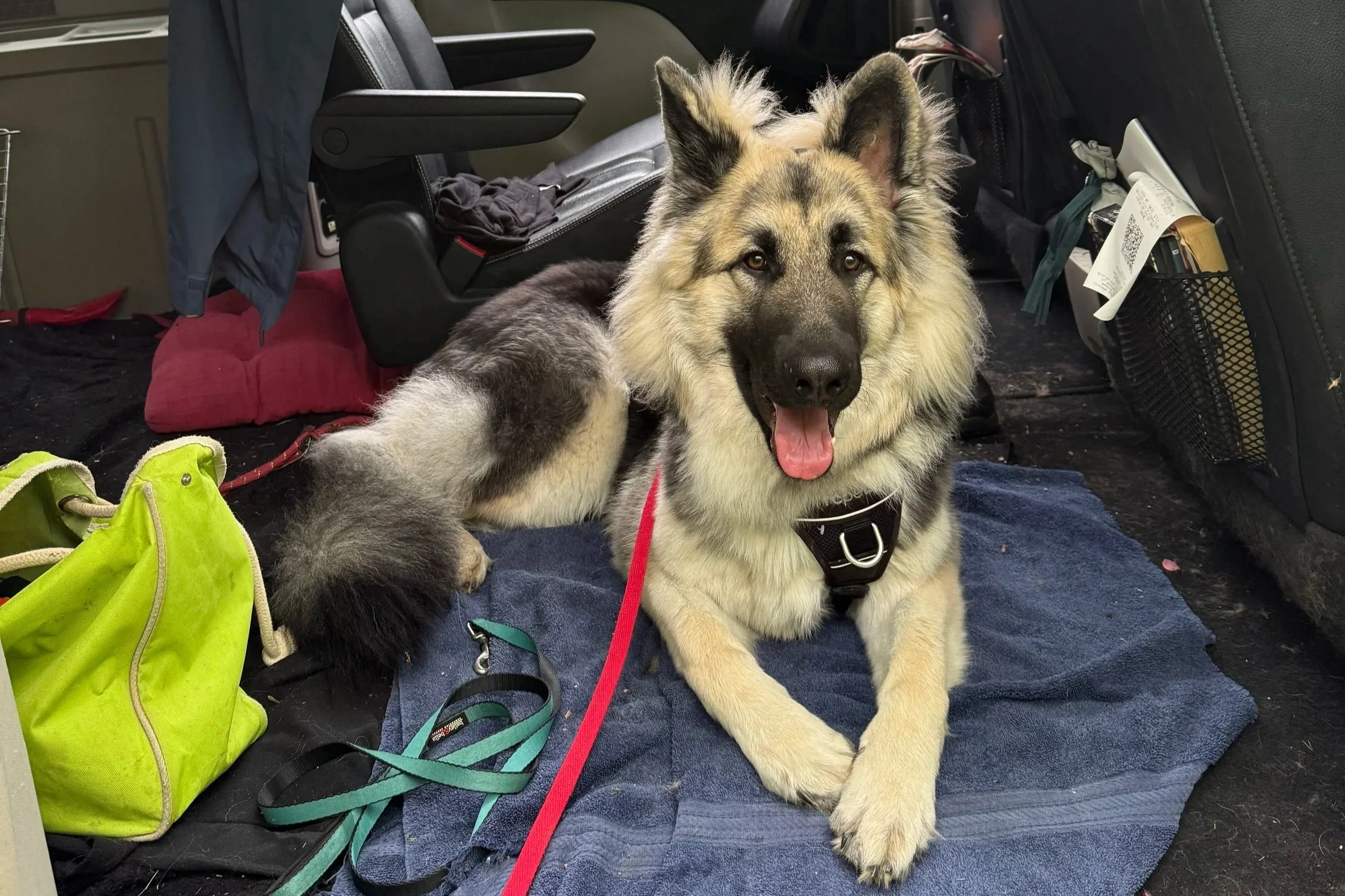
Recently, I took my German Shepherd, Gunther, to an Escape Games event here in Nova Scotia. It was such a blast, five stars, highly recommend! But the biggest takeaway wasn't about the puzzles or the escape rooms.
It was about that one question a listener sent in after hearing the podcast:
“How did you know when to leave Gunther alone to process and when to step in and help?”
That is the million-dollar question, isn't it? When do we butt in, and when do we butt out?
Let’s dive into it together. 🐾
The "Ears" Have It: Reading the Vibe
One of the beautiful things about dogs (and especially German Shepherds with those big, pointy satellites) is that they are constantly broadcasting how they feel.
If you’ve been paying attention, you know your dog has a "vibe." But we often get so caught up in the technical stuff, is the tail at a 45-degree angle?, that we miss the big picture.
I want you to zoom the lens out.
With Gunther, his ears tell the whole story. If one is forward and one is sideways, he’s multitasking his focus. If they’re both locked on, he’s processing.
But it’s not just about ears. It’s about how they use you in the environment.
Is that a "Help Me" Lean or a "This is Mine" Lean?
A lot of people notice their dog leaning into them or stepping on their foot.
Did yours just do that?
Many of us instinctively move our foot away or back up. We think we’re giving them space. But energetically? From a dog’s perspective, when you back up while they’re seeking connection, it can look like you’re just as nervous as they are.
It makes you both look weak in that moment. Ouch, right? I've made that mistake more times than I can count.
Here’s the difference to look for:
The Request for Backup: A dog that leans back into you while leaning away from a trigger is usually asking: "Are you there? Are you going to back me up in this conversation?" They aren't asking you to take over; they're asking for a teammate.
The Possession Lean: If a dog is assertive, forward-moving, and puts their foot on yours while staring down another dog? That’s possession. That’s them saying: "Just so you know, this human is mine."
Knowing the difference is the first step in knowing whether to butt in or butt out.
The Human "Herd" vs. The Dog "Pack"
This is where things get really "lifey."
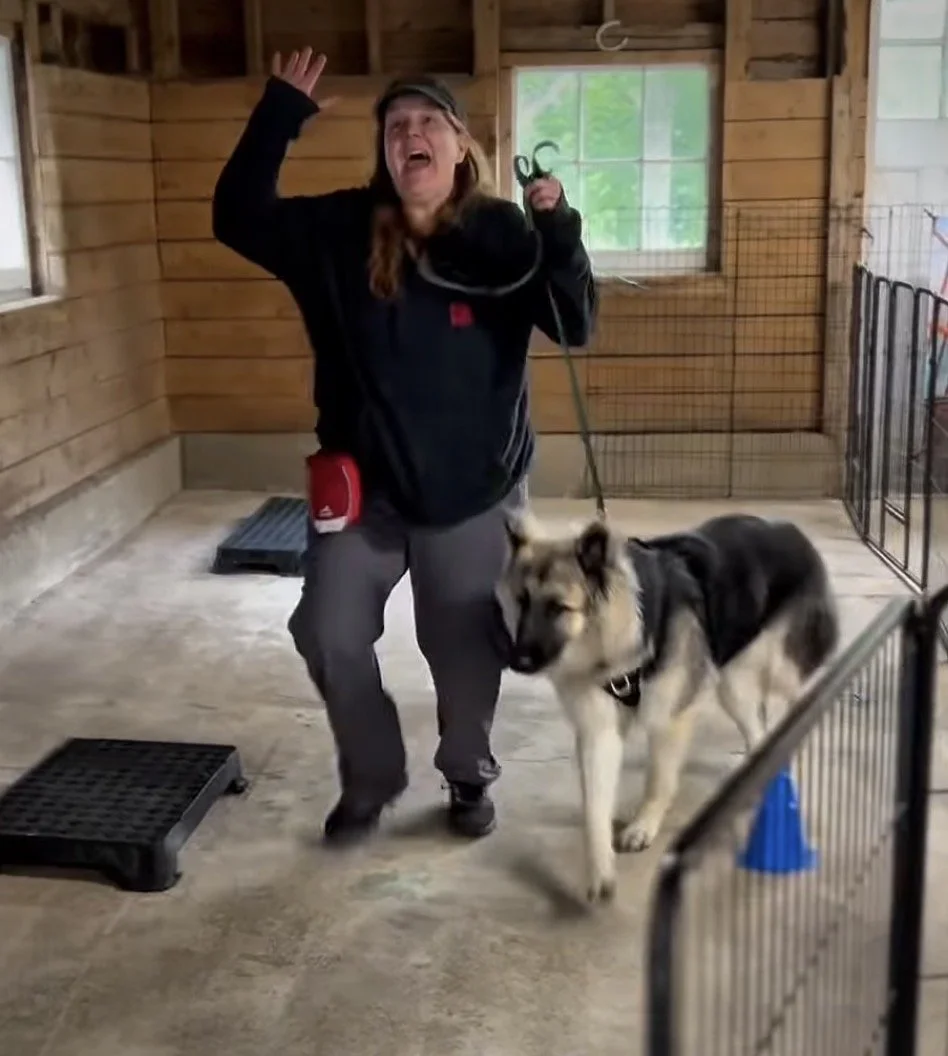
As humans, we are herd animals. We have this deep, innate drive to fit in. When I was at the Escape Games, I was the "new kid." Everyone else knew each other.
My human brain was screaming: "I hope they like me! What should I wear? Do I look silly in these boots?"
Gunther did not care.
Dogs don't show up to events hoping to make friends or fit into a community. They have their "pack", their intimate family unit. That’s it. That’s their whole world.
The mistake we make is prioritizing our herd needs (worrying about what the other dog owners think of us) over our dog's pack needs (safety and support).
When we’re more worried about looking "polite" than supporting our struggling dog, we leave our pack member out to dry.
Imagine how that feels for them.
We have to learn to put our human social anxiety in a box and show up for the dog at the end of our leash.
The Power of Being "Emotionally Neutral"
I talk about this a lot inside The Fearless Framework, but it’s worth repeating here.
You are the most important piece of feedback in your dog's environment.
If something "scary" happens, like a barking Corgi (they can be spicy little guys!), your dog is going to look at you. If you’re huffing, puffing, or getting tight on the leash, you’re confirming their fear.
But if you are emotionally neutral?
If you’re just... okay?
Your dog processes that. It tells them, "My partner isn't worried, so maybe I don't need to be either." It’s not about being a robot; it’s about being a stable anchor in their storm.
When to Actually "Butt In": Your Step-by-Step Guide
So, when do you actually stop letting them "process" and take over?
I have a little checklist I use for myself and my clients. If any of these are true, it’s time to step in:
Safety is an Issue: If there is an actual threat (like an off-leash dog charging), you step in. Period. You are the protector.
The Dog is No Longer Learning: If they are starting to spiral, barking, lunging, or just "locking on", they aren't processing anymore. They're surviving. Step in and change the scenery.
The Challenge Exceeds Their Skill Set: If you’re facing a "stackable trigger" situation (it’s raining, there are five dogs, and a motorcycle just went by), and you haven't practiced that yet? Take the lead. Don't set them up to fail.
They Need Clarity: Sometimes "butting in" is just a gentle, "Hey, let's move our feet this way." It’s providing a path forward when they’ve gotten stuck.
Remember: The goal isn't to never help your dog. The goal is partnership.
Sometimes partnership means, "I’ve got you, buddy, don't worry." And other times, it means, "I believe in you: you’ve got this."
Ready to Walk This Journey Together?
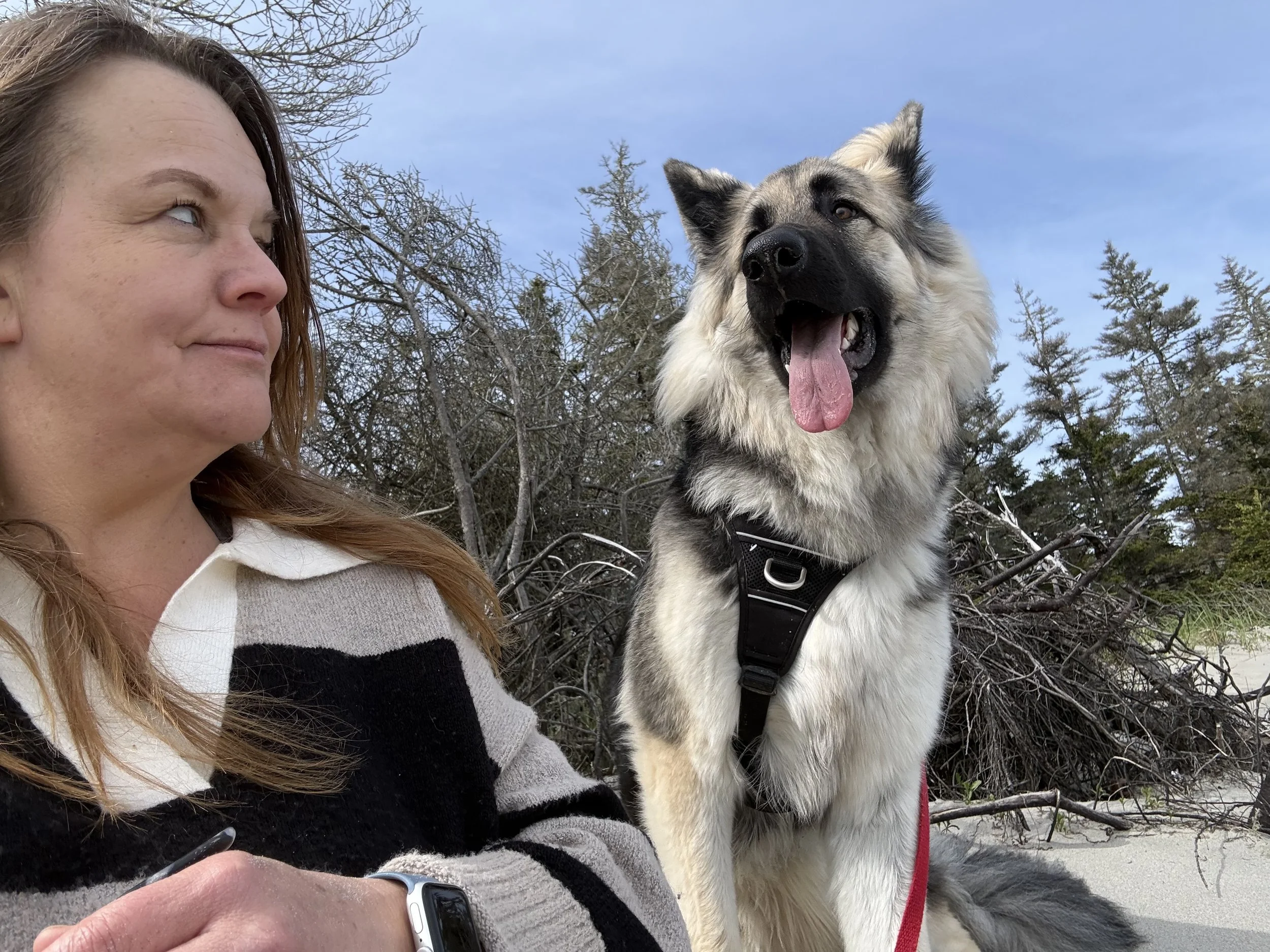
If you’re sitting there thinking, "Tracy, this sounds great, but I’m still struggling to read my dog’s signals," I want you to know you aren’t alone.
We weren't born knowing how to speak "dog." It’s a skill we build together.
That’s exactly why I created The Fearless Framework. It’s a 12-month online coaching journey where you get the support of me and a whole community of people who actually get it. No judgment, just real help for your reactive or fearful dog.
Click here to join us inside The Fearless Framework.
Confidence isn’t built when life is easy. It’s built when challenges are manageable and your dog learns: "I can do hard things."
And you can, too.
I’m here for you! 🐾
Tracy
P.S. If you haven't checked out the full podcast episode yet, head over to Episode 216 to hear the full story of the Escape Games and why I almost "shot a look" at a Corgi!