Does your dog bark at guests, keep a close eye on visitors, or seem settled until somebody stands up? If your dog hates having company over, it’s easy to feel embarrassed, tense, and unsure what to do next.
Here’s the reframe I want you to try: your dog does not have to like your company. And your company does not have to work hard to make your dog like them.
That doesn’t mean letting your dog bark and intimidate people. It means releasing the expectation that your dog should welcome every person into their home.
This is the second post in my Reframe Yourself series, based on episode 258 of the Beyond Obedience podcast. The first post is about reframing difficult vet visits.
> Your dog doesn’t have to love your guests. The goal is to help them feel comfortable with people existing in their space, and to know you’ve got them.
Your dog doesn’t have to like having company over
Have you ever felt pressure to make your dog friendly with everyone who walks through the door?
We ask dogs to move through the world ignoring their natural instincts and greeting every human like a long-lost friend. Meanwhile, you and I both have days when we’re not feeling especially sociable.
The bar I set for my own dogs is simple: you don’t have to like every person you meet, but you can’t be a jerk about it.
That doesn’t mean expecting a fearful dog to tolerate unwanted attention. It means setting everyone up safely, giving your dog space, and not making them perform friendliness for your guests.
The real goal isn’t a dog who loves your visitors. It’s a dog who can be comfortable with those people existing in the home. You might not get there on the first visit, and that’s okay.
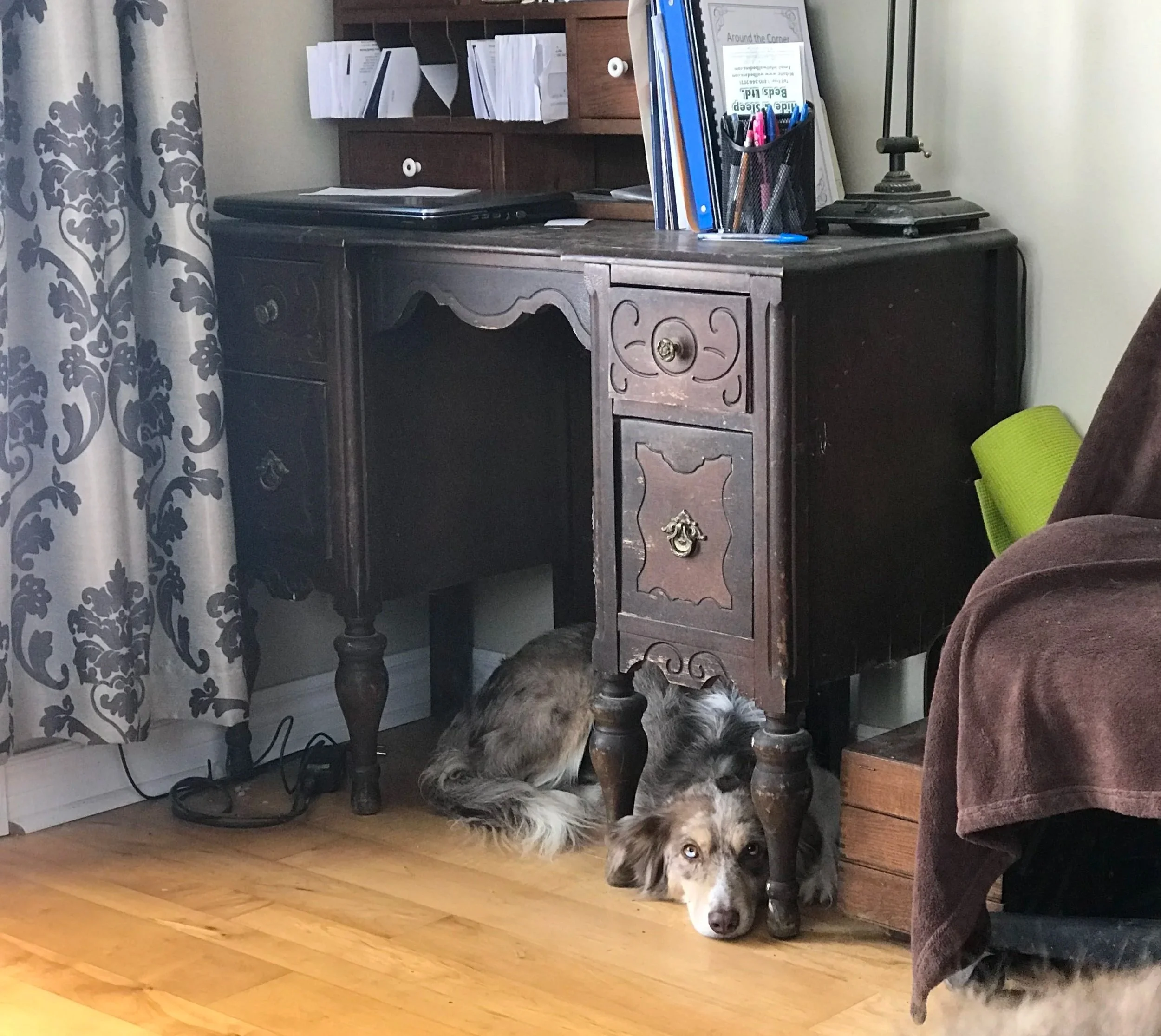
Why a dog may bark at guests in their own home
Are you looking at the room from your dog’s point of view?
Home is familiar. Your dog knows the routines, the people, and what usually happens there. It may be the place they rest and feel most secure.
It’s also where their important resources are, including you. Then a new person walks into that familiar space. Your dog has a lot to assess: Who are you? What are you doing here? Are you going to take something?
Dogs don’t usually invite the neighbours over for a visit. So an unfamiliar person arriving in their space may give them pause, even if that guest is lovely.
For an innately fearful or unconfident dog, guests can change how the whole home feels. In that case, a smaller, designated safe space may work better than expecting the entire house to stay a comfort zone.
Notice your dog’s communication
Dog body language signs need to be understood in context. A dog who watches guests closely, moves away, stiffens, barks, or growls may be telling you they’re uncomfortable.
Rather than demanding that they stop communicating, pay attention and respond. Leadership is being present, predictable, responsive, and clear, not asking for a string of obedience commands while your dog is struggling.
Your dog needs to trust you, not your guests
What if you didn’t need your dog to decide that the visitor is a new best friend?
Your dog is learning whether they can trust you while that person is present. The message you’re offering is: I invited this person in. I’m comfortable with them being here. I’ve assessed the situation, and I’ve got it under control.
Over repeated, predictable experiences, your dog can begin to find comfort in the fact that you’re okay with the situation.
That’s the trust progression I teach in the Fearless Framework: first, your dog learns to trust you; then they learn to trust the situations you help them navigate; and over time, they learn to trust themselves.
You aren’t trying to make your dog dependent on you. You’re becoming a bridge to their independence: one clear, supportive moment at a time.
How to introduce guests to a reactive dog: a practical plan
Imagine company arriving and your dog having enough room to notice the visitor without feeling pressed to greet them. You can enjoy your conversation, your guest can relax, and your dog can settle nearby, or choose a separate space.
Here are a few places to start.
Step 1: Rethink the room setup
The classic arrangement is you sitting in a chair, your dog beside you, and your guest across the room, with both of you facing the visitor. That can accidentally create an us versus them feeling.
Try sitting on more of a diagonal, moving a little closer to your guest, or positioning yourself between the guest and your dog. Relax your body and consider what your position may be communicating.
Yes, sitting diagonally while holding a conversation can feel a little odd. We’re looking at how the arrangement lands for the dog, not whether it’s the most conventional seating plan. Your calm, clear presence can help both your dog and your guest feel more at ease.
Step 2: Plan for guests to move
Does your dog settle, only to bark or lunge as soon as someone stands up to use the bathroom?
Movement changes the picture. A person who was sitting still is suddenly standing, moving through the room, or changing direction. For a dog who isn’t sure about that person yet, that can feel like a change in the situation.
Ask guests to give you a heads-up before they stand or move rooms. That gives you a moment to notice your dog and respond before things escalate.
For some dogs, a light house drag line may offer a little extra guidance. Use it only under close supervision so it cannot catch on furniture or other objects. Never leave a dog unattended with a dangling line.
If you’re comfortable that it’s safe, you can keep the line nearby, sit on its end, or place a foot on it to notice when your dog shifts. Then you can calmly guide them back and communicate, “I’ve got you. This person is okay.” Be proactive rather than waiting for a reaction.
Step 3: Put safety before practice
This plan is not for a dog who may bite. All dogs have the potential to bite, and a history of using their mouth to disagree or make a point means it’s time for in-person support.
Work with a qualified professional who can assess your dog and your setup directly. If a muzzle is part of the safety plan, muzzle-condition your dog ahead of time so they can learn about it gradually.
My muzzle reframe? A muzzle is also for the people. It can help humans in the room feel safer and make clearer decisions. It isn’t something to feel ashamed of, and it doesn’t replace careful management or professional guidance.
Step 4: Ask whether this visit needs to become practice
How often will these people actually be in your home?
If it’s family or friends who’ll be part of your life regularly, it may be worth investing time in calm, predictable experiences together. Comfort takes repetition. You can’t manufacture it in one afternoon.
If someone is visiting once in a blue moon, or once and never again, your dog may not need to learn to share the room with them. Giving your dog a quiet, separate place to be is not failure. It’s noticing what they need and making a thoughtful choice.
Keep the home peaceful and low-key. You don’t need to turn a visit into a high-energy training session or indoor search game. Sometimes the most helpful thing is simply giving your dog space to rest while you enjoy your company.
Don’t ask guests to win your dog over
Before anyone arrives, check your expectations. Don’t expect your dog to love your guests, and don’t ask your guests to win the dog over.
You’ve probably seen the routine: someone coaxes a dog to take a treat, then reaches out to pet them. But taking food doesn’t mean the dog has agreed to be touched.
Let your guests enjoy their visit without greeting or petting your dog. Your dog doesn’t have to be everybody’s friend.
Sometimes the goal is learning to coexist. Sometimes it’s giving your dog more space. Either way, the important work is helping them learn that they can trust you while company is present.
When you become a steady, predictable presence, you become your dog’s comfort zone. That’s not about keeping them dependent on you. It’s about giving them a safe bridge toward navigating more of life on their own. 🐾
If you’d like to walk the journey with other dog lovers, join the free Living Beyond Obedience Facebook group. For more support with fearful dog training and reactive dog training, explore the Fearless Framework or get in touch.
Here for you and your dog!
Frequently asked questions about dogs and visitors
Why does my dog bark at guests?
A visitor is entering your dog’s familiar space, and barking may be part of how your dog responds to uncertainty or discomfort. Look at the whole situation and your dog’s body language, rather than assuming they need to be friendly or that they’re being “bad.”
Should my dog greet everyone who visits?
No. Your dog does not have to greet or be petted by every visitor. For many dogs, calmly sharing space, or relaxing somewhere separate, is a more appropriate goal.
Why does my dog react when someone gets up to leave the room?
A person standing or moving changes the situation. A dog who was beginning to settle may feel unsure again when the visitor changes position or moves through the home.
Should I put my dog away when company comes?
Sometimes, yes. If visitors are rare, or your dog is more comfortable in a quiet separate space, giving them that option can be a thoughtful choice, not a failure.
How do I introduce a fearful dog to visitors?
Start by managing the space and setting expectations with your guests: no approaching, greeting, or petting the dog. For regular visitors, create predictable experiences at a pace your dog can handle. If there is a bite risk, seek help from a qualified professional who can assess the situation in person.
Does my dog have to like my guests?
No. The goal can simply be helping your dog feel safe enough to coexist or rest elsewhere while you have company. Your dog doesn’t have to trust your guests; they need to learn that they can trust you when guests are there.