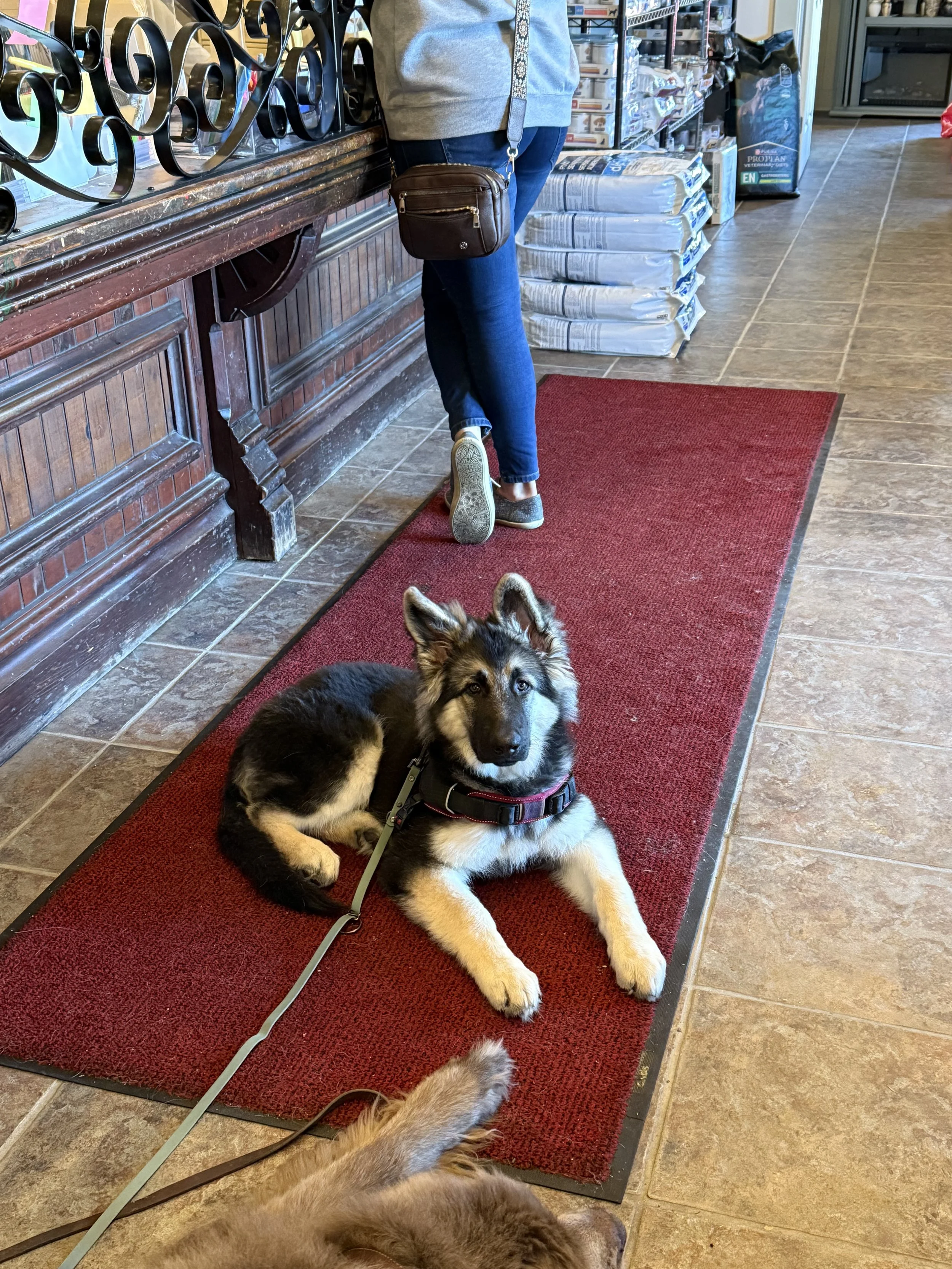
Does the thought of taking your dog scared of the vet make your stomach tighten? If you’re already imagining barking, pulling away, or needing a muzzle before you’ve even left home, you’re not alone. I’m world-class at preparing for the worst, too.
But what if the first thing to change isn’t your dog’s behaviour? In episode 257 of the Beyond Obedience podcast, the first episode of my Reframe Yourself series, I talk about changing the mindset we bring into difficult situations. The goal isn’t to convince yourself the visit will be wonderful. It’s to walk in thinking: “We’re going to get through this together.”
Listen to the Beyond Obedience podcast on Apple Podcasts.
> You don’t have to make your dog love the vet. You can help them experience a difficult visit with a partner they can count on.
Why a dog may be scared of the vet
Have you ever thought about what the clinic is like from your dog’s point of view?
It’s a small, unfamiliar place full of smells, sounds, animals, people, and handling. There may be disinfectant, medication, or anaesthesia scents, along with the scent of dogs, cats, and humans who are stressed or unwell. Your dog has to take all that information in and figure out what it means for them.
Some people are worried about a diagnosis or cost. Others may be facing an especially hard visit. A puppy may simply be picking up on the unusual energy without knowing why they’re there.
When I worked in veterinary clinics as a vet tech, I saw dogs who wagged their tails and looked fine on the surface but still seemed tense and anxious. A wagging tail doesn’t tell you the whole story. Notice your dog’s body language signs in context, and let the veterinary team know what you’re seeing.
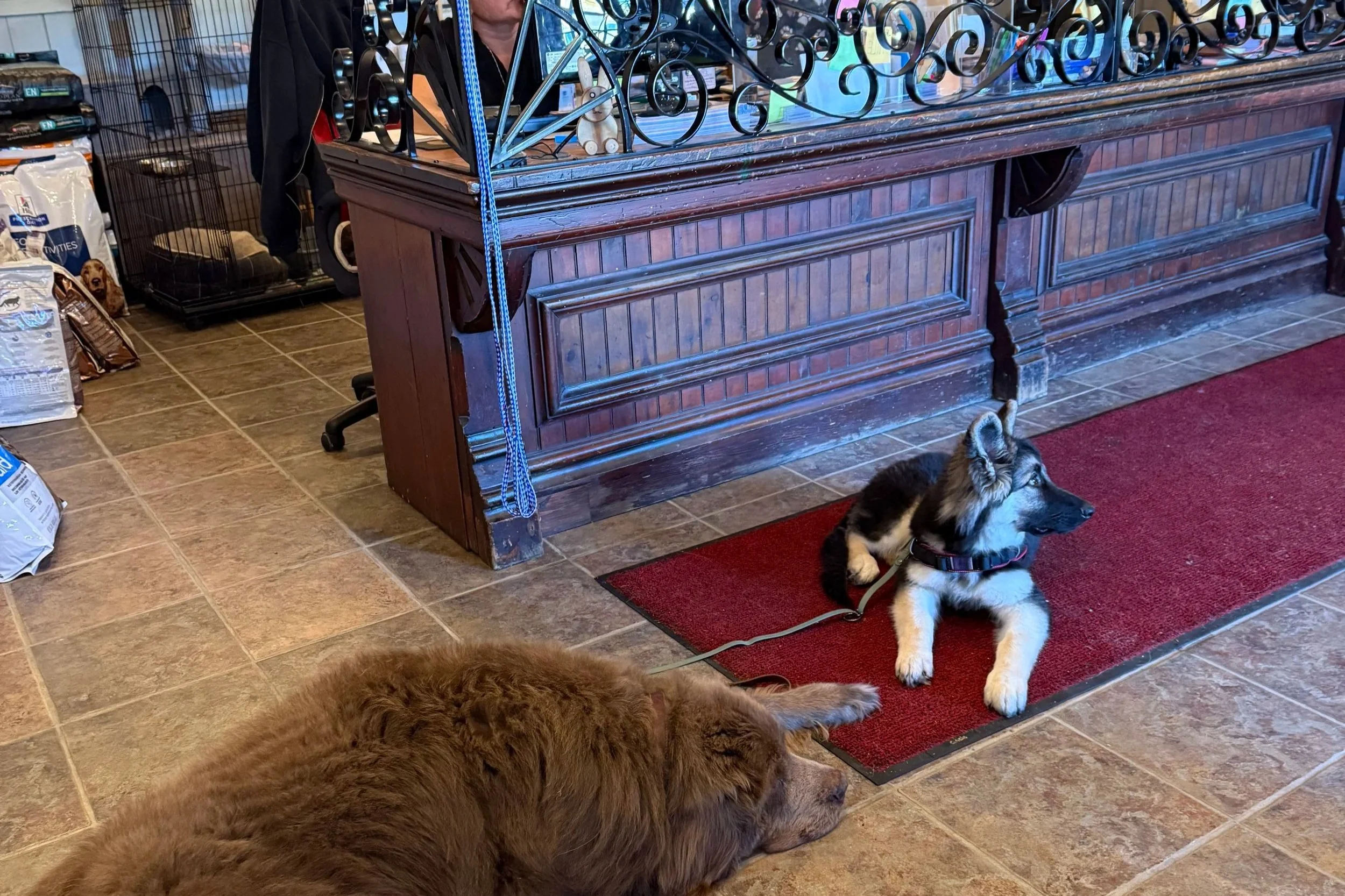
And the stress can start before you reach the clinic. It may begin at home, when you think, “This is going to be awful.” Your dog can notice changes in how you move, speak, or handle the carrier, leash, or muzzle.
That isn’t a reason to blame yourself. It’s an opportunity to prepare together. For a fearful dog, training and behaviour modification aren’t about demanding that they feel differently. They’re about becoming steady, responsive support when a situation is hard.
Reframe vet visit anxiety: “I’ve got you”
Are you tempted to tell your dog, “You’re okay, you’re okay,” while your own heart is racing?
I get it. We want to soothe them. But try a calmer, more grounded message instead: “I’ve got you.” “We’ve got this.” “We’re good.”
You don’t have to pretend your dog is comfortable. Don’t demand that they feel differently or try to talk them out of being afraid. Acknowledge that this may be difficult, and show up as their partner.
I find a level, steady voice more helpful than repeated, high-pitched reassurance. That urgent “it’s okay, it’s okay” can add to the frantic feeling in the room. When you stay calm and clear, the veterinary team may also find it easier to ease off the extra placating tone and focus on the care your dog needs.
How to calm an anxious dog doesn’t mean making them instantly relaxed. It means offering clarity, support, and a plan while you get through the next moment.
A practical plan for a difficult vet visit
Step 1: Reset before you go inside
If time and your dog’s health allow, take a short walk near the clinic and let your dog sniff. It gives them a chance to toilet and may help them settle into the immediate environment.
Arrive a little early if you can. If the waiting room is busy, stay in the car for a few quiet minutes. Try a short BE WITH: sit beside your dog, breathe, and give yourself a chance to recenter before you head in.
If your dog is unwell or the visit is urgent, don’t delay care for a walk or a calming routine. Call the clinic and ask how they’d like you to arrive.
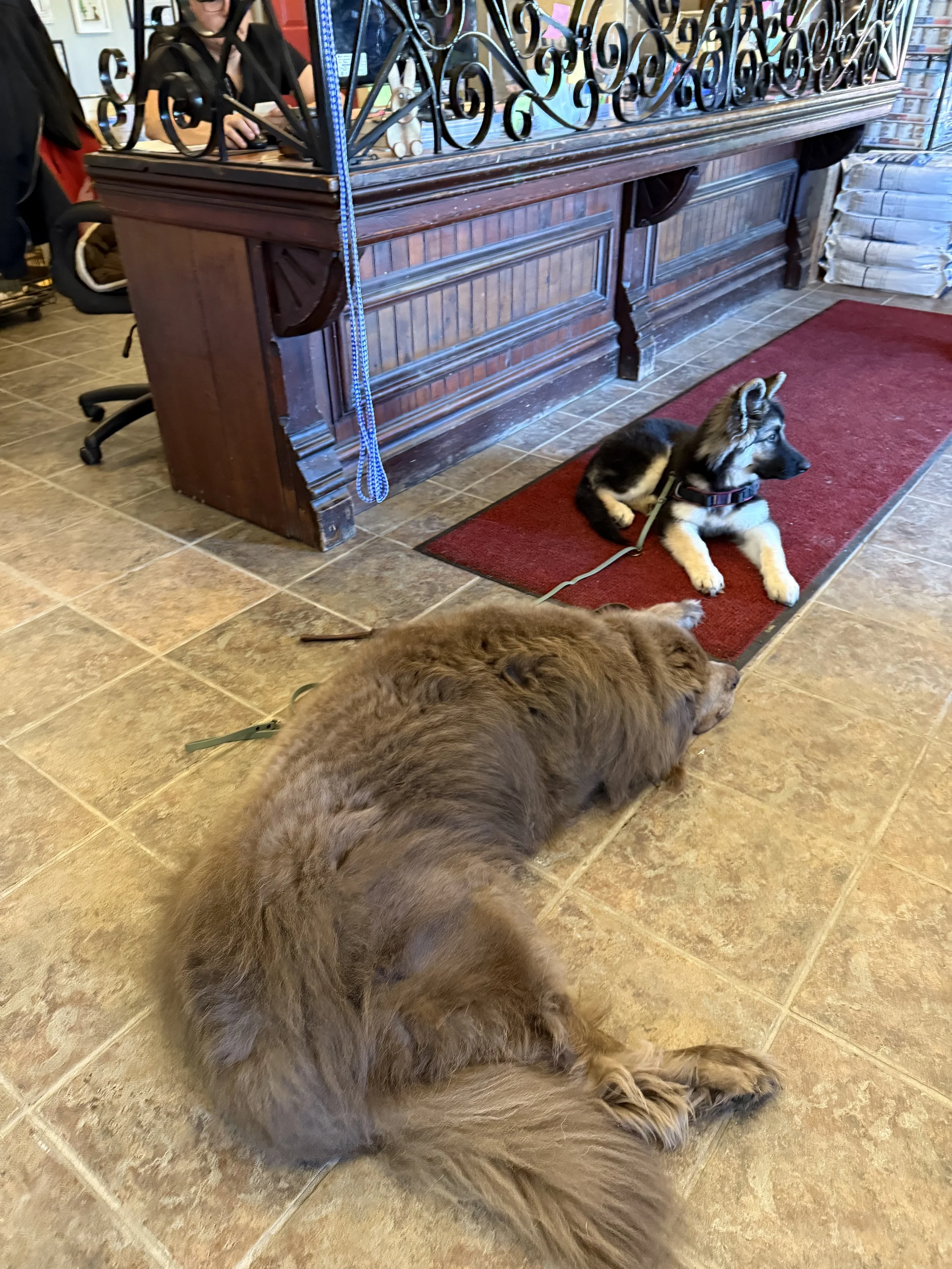
Step 2: Look around and make space
What’s moving through the waiting area? Notice the front door, reception desk, exam-room doors, and places where animals come and go. From your dog’s perspective, even a kind stranger can feel like a lot when they’re already worried.
Choose a spot where you can see what’s happening and, when practical, place yourself between your dog and the busiest areas. Keep your dog close; having them tucked between your legs may help if they find that position comfortable.
You don’t need a confrontation to advocate for your dog. If someone approaches to pet or greet them, a simple, calm “Please give them space” is enough. This is not the time or place for your dog to meet everyone.
Step 3: Make the muzzle part of the plan, not a reason for shame
Does your dog need a muzzle or sedation for veterinary care? Please don’t turn that into a judgment about either of you.
I find it helpful to think of a muzzle as a safety tool that can help the humans in the room stay calmer and make it easier for the team to provide care. It’s not a failure, and you don’t need to apologize for using one.
Talk with your veterinary team ahead of time about the right muzzle, how to fit it safely, and how to prepare your dog for it where possible. If you think medication or sedation might be needed, ask your veterinarian about a plan; use medication only as directed by them.
Step 4: Stay steady through necessary handling
What if your dog disagrees with an exam or procedure? Stay present. Don’t get angry, frantic, or turn the moment into a fight.
Work with the veterinary team on the safest way to support your dog. Keep your contact steady and supportive, not crushing or panicked. If your dog struggles, adding a tighter grip automatically can make the struggle worse. Ask the team whether a pause or a different approach is possible and safe.
Sometimes a procedure is necessary, and the kindest thing is to help your dog through it without anger or a death grip. For more on handling a dog who says no to something necessary, read “Your Dog Said No. Now What?”.
After the appointment, help your dog decompress
Are you still standing at reception sorting out the bill while your dog is wound tight? If it’s safe and the clinic is comfortable with the plan, ask whether you can take your dog outside first.
Let them sniff or walk for a few minutes. Offer calm, familiar touch if they welcome it, and tell them, “We did it. We got through it.” Then, if appropriate, let your dog settle in the car while you go back to pay.
A predictable closing ritual (some quiet time outside, a little decompression, then heading home) can give your dog a familiar next step after an unfamiliar experience.
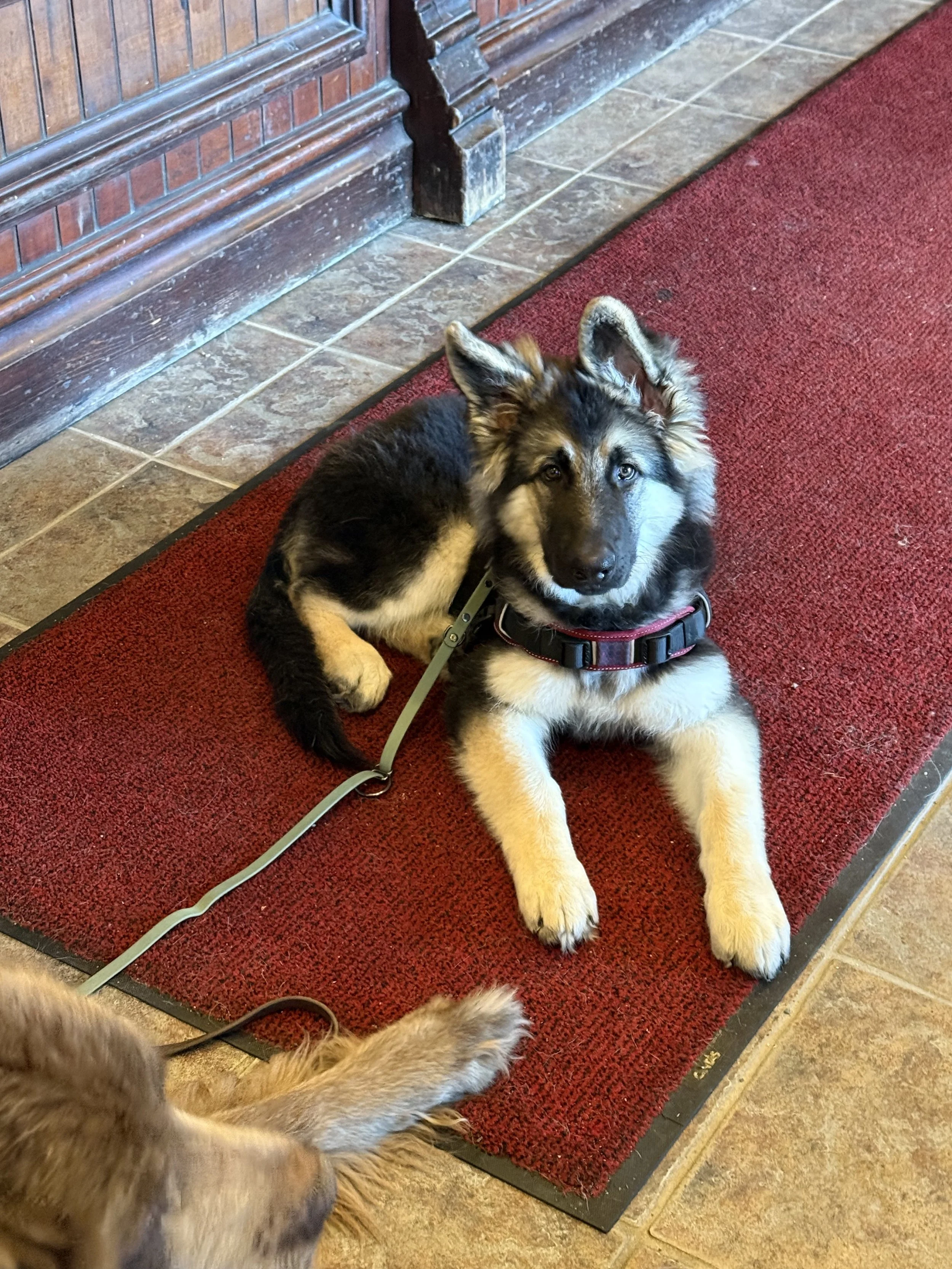
Do happy visits make a dog love the vet?
A visit just to step on the scale or have a cookie may be pleasant, and it can be part of your plan if your dog is comfortable and the clinic can accommodate it. But it isn’t a guarantee.
One painful or frightening experience (such as an exam on a sore ear, a vaccination, or being restrained) can matter more to your dog than a series of easy visits. A cookie visit is not a magic eraser. And liking the vet doesn’t need to be the goal.
The more useful goal is a dog who has support and a predictable partner when care is needed. Cooperative care and muzzle training for dogs may also be worth discussing with a qualified professional and your veterinary team, especially if your dog finds handling difficult.
You are the constant your dog can count on
Every vet visit is different: different smells, animals, concerns, and procedures. The one familiar part your dog brings into that room is you.
That doesn’t mean you have to be perfectly calm. It means you can take a breath, notice what your dog is communicating, and choose the next clear, supportive step. You are the constant.
This is the first post in my Reframe Yourself series, inspired by episode 257 of the Beyond Obedience podcast. If you’ve had a challenging vet visit, come share how it went in the free Living Beyond Obedience Facebook group. If you’d like more guidance for your fearful or reactive dog, you can explore the Fearless Framework or contact me.
Here for you and your dog. 🐾
Frequently asked questions about dog vet visit anxiety
Why is my dog so scared of the vet?
Vet clinics can be full of unfamiliar smells, sounds, animals, and handling. A dog may also remember a painful or frightening procedure. Some dogs look outwardly relaxed but still feel anxious, so consider the whole picture of their body language and behaviour.
How do I calm my dog down at the vet?
Start with your own steady, realistic mindset: “We’re going to get through this together.” If it’s appropriate for your dog’s health and timing, take a short sniff walk, pause in the car, and choose a waiting spot with more space. Ask the clinic what options are available if the waiting room is difficult.
Should I stay in the room with my dog at the vet?
Ask the veterinary team what is safest and most helpful for your dog and the procedure. If you can stay, a familiar person may provide support; some procedures or circumstances may require a different plan.
Do happy visits make a dog less afraid of the vet?
They may offer a pleasant experience, but they don’t guarantee your dog will feel comfortable during an exam or procedure. A happy visit doesn’t erase a painful or scary experience, and your dog does not have to love the vet for you to support them well.
Should I feel bad about muzzling my dog at the vet?
No. A properly chosen and fitted muzzle can be a helpful safety tool. Ask your vet team what they recommend, and talk with a qualified professional about muzzle training if your dog needs time to become comfortable wearing one.
How do I help a dog who needs to be sedated at the vet?
Talk with your veterinarian ahead of time about your dog’s needs and the safest plan. Follow their instructions for any prescribed medication or sedation; don’t adjust doses or delay urgent care without speaking to the clinic.