Stop Watching Your Dog (You’re Being Weird About It)
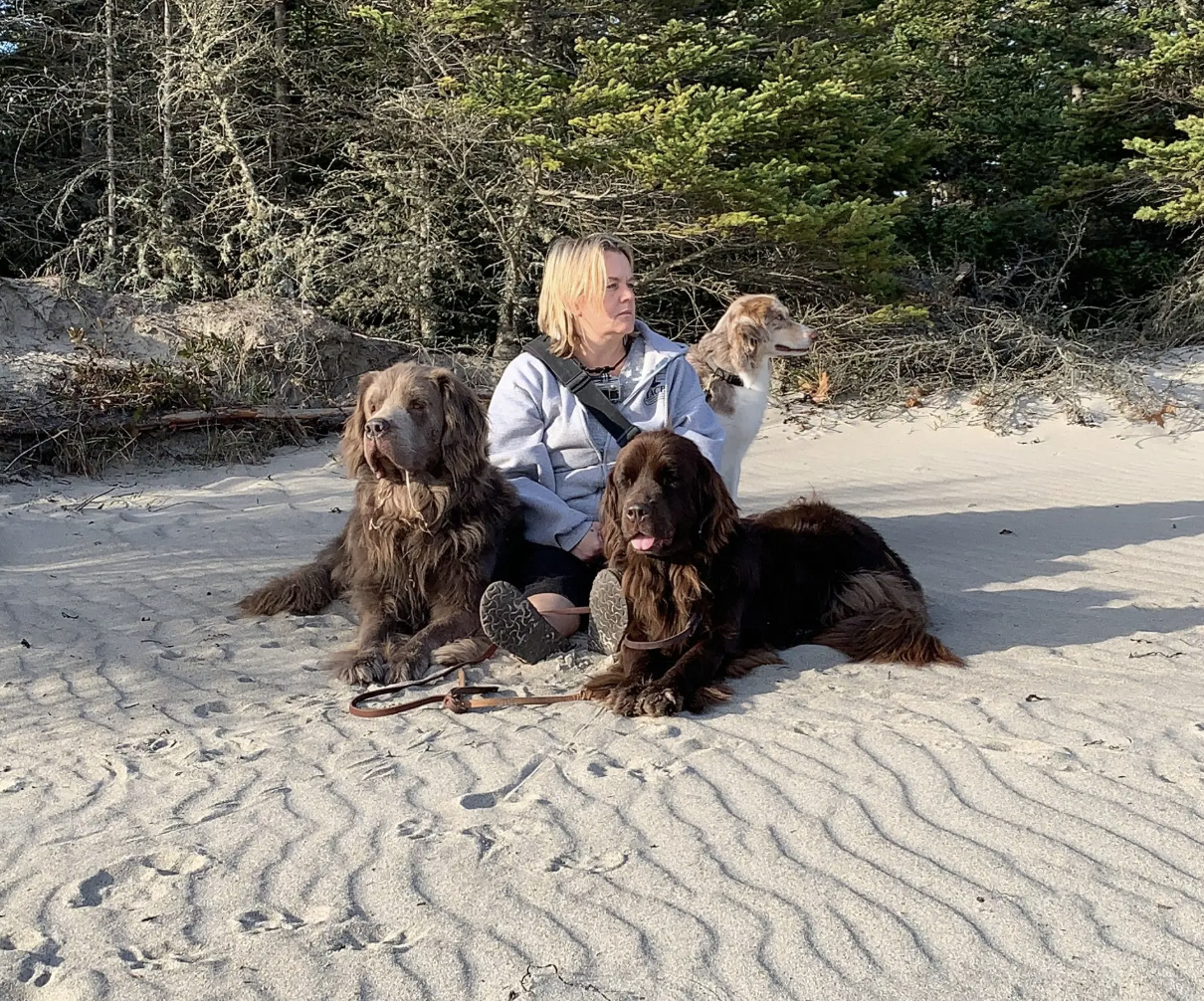
If you’ve ever found yourself standing in the middle of a park, frozen like a statue, staring intensely at your dog’s ears, you’re not alone.
Maybe you’ve spent whole walks with your neck craned down, eyes practically vibrating as you scan for a single lip lick or a slight stiffening of the tail.
Maybe you’ve been trying to be a "body language detective."
Maybe you’ve been trying to catch that elusive "spark before the explosion."
But let’s be real for a second...
You’re being weird about it. 🐾
And I say that with so much love!
But the truth is, when we spend our entire walk hyper-fixated on every tiny twitch our dog makes, we aren’t actually helping them.
We’re just becoming a very tense, very creepy observer.
Today, we’re going to talk about why you need to stop watching your dog and start becoming aware with them.
The Body Language Detective Trap
If you’re dealing with leash reactivity training, someone has probably told you to watch for "the signs."
You know the ones:
The lip licking.
The freezing.
The "whale eye."
The scanning.
And don’t get me wrong, dog body language signs are super important!
Knowing your dog matters.
But here is the big "but":
Those things happen so fast.
By the time your slow human eyes have processed that your dog’s ear flicked two degrees to the left, the reaction has already started.
I swear, your dog is thinking: "Hey, what’s that thing? I’m gonna go eat it!"
And by the time you've categorized that ear flick as "Phase 1 Alertness," you’re already behind the dog.
Even when I use video for my one-on-one coaching sessions, we often have to slow it down frame-by-frame just to see where it started.
In real life, without a "pause" button, trying to catch every subtle signal is an exercise in frustration.
Why We Are Always Two Seconds Behind
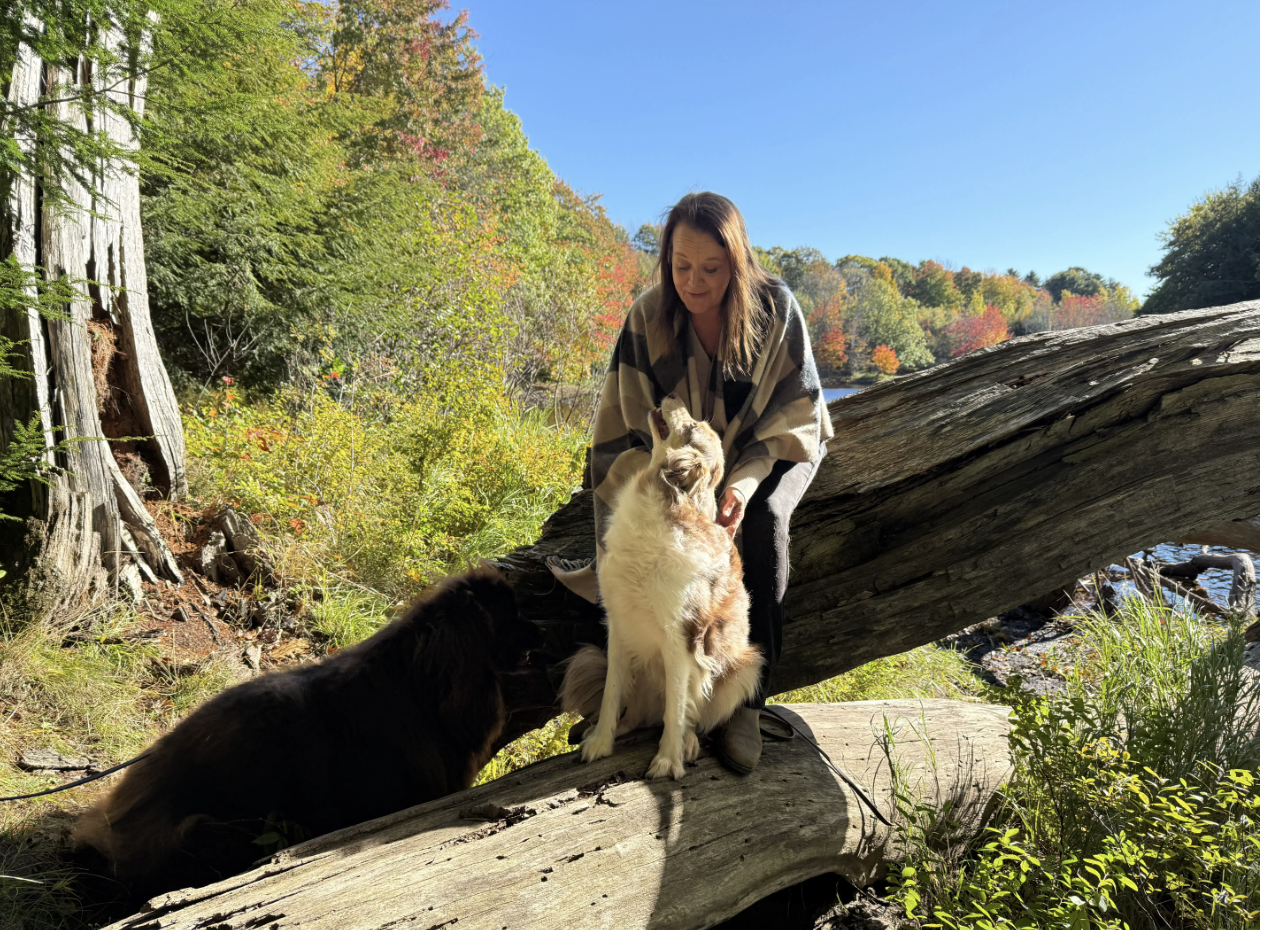
The reason we feel so exhausted after a walk with a reactive dog isn't just the physical pulling.
It’s the mental load.
We’ve been told to focus entirely on the dog.
"What is he doing? How is he feeling? Is he tensing up?"
But while you’re staring at your dog’s left shoulder, the rest of the world is happening around you.
When you spend all your time looking down, you lose track of the environment.
You miss the bicycle coming up from behind.
You miss the loose dog across the street.
And because you’ve lost track of the environment, you are forced to react only after your dog has already processed the world.
You’re essentially waiting for your dog’s body language to tell you there’s a "threat."
And by then?
It’s too late. The explosion is already in motion.
Stop Being a Creepy Predator (Move Your Feet!)
Have you ever been to a dog park and seen a group of humans standing in a circle, coffee in hand, staring silently at their dogs?
It’s a bit weird, right?
In the animal world, predators stand still and stare.
When you stand like a statue and stare at your dog, you aren’t offering support.
You’re adding pressure.
In our Beyond Obedience podcast, I often talk about the "Move Your Feet" rule.
Back when I ran pack walks, I would tell everyone: If you’re here, move your feet.
Movement is life.
Don’t just stand there and stare.
Explore the area with your dog.
Be a part of the situation instead of an outside observer.
When you move with your dog, you shift from being a "monitor" to being a partner.
Awareness vs. Hyper-Vigilance
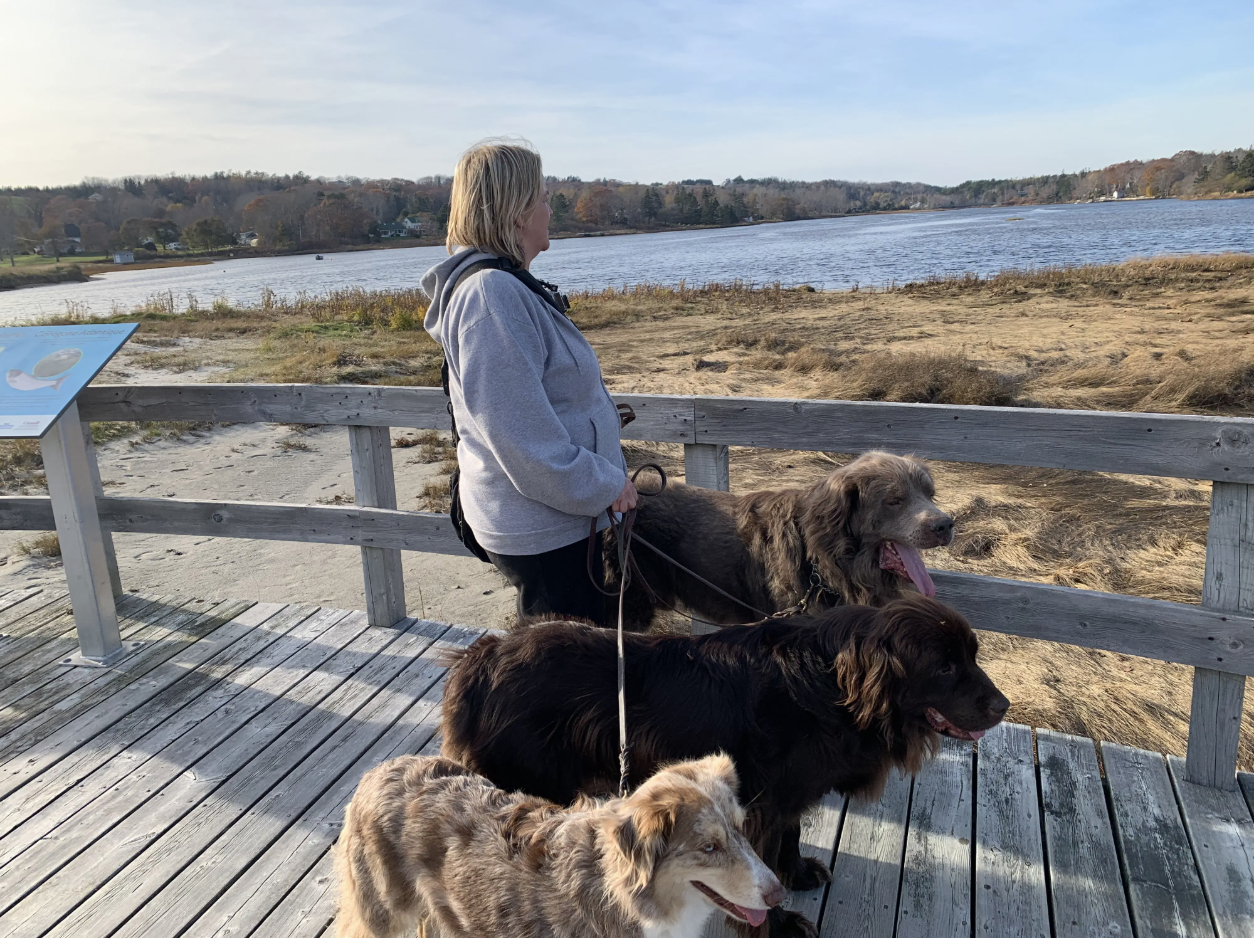
Now, I know some of my friends with fearful dogs are thinking, "But Tracy, I am aware! I’m constantly looking for triggers!"
There is a massive difference between hyper-vigilance and awareness.
Hyper-vigilance is rooted in anxiety.
It’s that feeling of: "I hope nothing happens. I hope no one comes around the corner. Oh no, is that a dog? What do I do??" 🌀
That energy travel straight down the leash.
Awareness, on the other hand, is about building a relationship.
When I take a dog out, I am assessing threats too.
But I’m not looking for them to avoid them in a panic.
I’m looking for opportunities to bond and connect with the dog.
Instead of thinking, "I hope we don't see a dog," try thinking, "If we see a dog, I’m going to show my partner that I’ve got this."
The "Be With" Shift: A Step-by-Step Path
So, how do we stop being "weird" and start being partners?
It starts with learning how to calm an anxious dog by just being with them.
In my programs, we use a practice called a "Be With" session.
It’s a simple but powerful way to reset your relationship.
Step 1: Find a Quiet Spot
Sit down with your dog in a low-pressure environment. No training, no cues, no "sit" or "stay."
Step 2: Observe Together
Don’t look at your dog. Look at what your dog is looking at.
Is there a bird? Is there a leaf blowing?
Get down on their level and view the world from their perspective.
Step 3: Partner in Survival
When your dog notices something, acknowledge it.
Instead of staring at them to see if they’ll bark, look at the "thing" yourself.
Decide how you feel about it.
If you think that dog across the street looks a bit chaotic, make a decision:
"You know what, buddy? That looks like a lot. Let’s head this way instead."
The shift happens when your dog realizes they aren’t alone in processing the world.
They don't have to handle "survival" by themselves because they finally have a leader who is paying attention to the environment, not just the end of the leash.
It’s Not About Obedience; It’s About Trust
Most traditional training tells you to control your dog through the environment.
But there are too many variables in the real world to ever have 100% control.
The goal isn't to have a perfectly "obedient" dog who ignores the world because they’re afraid of a correction.
The goal is to become someone your dog feels safe navigating the world with.
When your dog stops feeling like they are the only one on guard duty, they can finally start to relax.
And when they relax, you can stop being a detective and start being a dog owner again.
You can stop being "weird" and start having fun.
Imagine that: a walk where you both actually enjoy the scenery. 🌲
Listen to the Full Episode
Want to go deeper into this idea?
In the audio, we unpack the "Move Your Feet" rule in a much bigger way and talk about what it really looks like to stop hovering over your dog and start moving through the world together.
If this post had you nodding along, I think you’ll really enjoy the full conversation.
It’s also available on Spotify if that’s more your vibe. 🎧
Take the Next Step on Your Journey
If you’re tired of the stress and the constant scanning, I’d love to invite you to join us inside the Fearless Framework.
It’s my 12-month online journey designed specifically for dog lovers who are struggling with fearful or reactive dogs.
We don't do "chicken wiener" training or "stop and stare" management.
We go deep into the relationship, building that natural confidence and trust so you can finally have a peaceful life together.
Learn more about the Fearless Framework here!
You don't have to figure this out alone.
We’re walking this journey together. 👣
Here for you! 🐾
Tracy