Are You Training Your Dog… or Just Performing Dog Training?
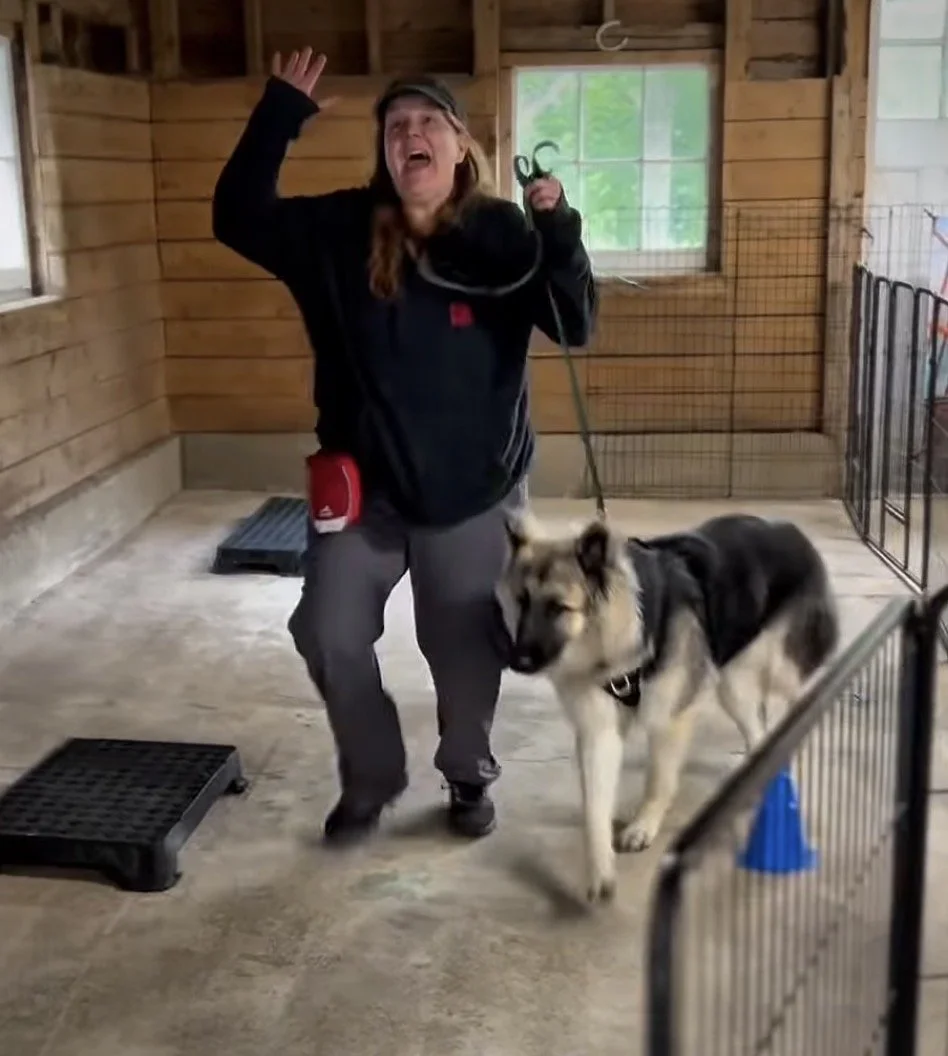
Have you ever learned a dog training technique, gone home, done exactly what you were told to do, and it still didn’t work?
Maybe the problem isn’t the technique.
Maybe, somewhere along the way, we started performing dog training instead of actually communicating with our dogs.
I know how easy this is because I’ve done it too.
You learn the right words. You hold the leash the right way. You offer the treat at the right moment. You remember the steps.
And yet your dog is still barking, pulling, reacting, or looking at you as if you’ve suddenly started speaking fluent squirrel.
How interesting.
There is a huge difference between communicating with your dog and performing dog training steps.
What does it mean to “perform” dog training?
A performative approach looks like this:
“What step comes next?”
“When do I say the word?”
“Did I reward too late?”
“Am I standing correctly?”
“What would Tracy do?”
You may be doing everything technically right.
But you may not be paying attention to the living, breathing dog standing in front of you.
That’s the part I don’t want us to lose.
Your dog isn’t responding to your choreography. Your dog is responding to you, your body, your voice, your timing, your emotional state, and what is actually happening in your head.
That’s true whether you’re working on positive dog training, reactive dog training, fearful dog training, loose leash walking, or helping your dog settle at home.
The goal isn’t constant calmness or perfect obedience.
The goal is clarity.
Leadership means being present, predictable, responsive, and clear. It means your response makes sense in context. Sometimes that response is quiet and gentle. Sometimes safety requires a sudden change in energy or voice.
Predictability does not mean acting exactly the same in every situation.
It means your dog can understand why you responded the way you did.
The window exercise is not really about the window
In the previous episode, I talked about what to do when your dog barks at the window.
The basic steps are simple:
Your dog barks.
You walk over to the window.
You look outside.
You say, “Thank you.”
You ask your dog to come away.
But you can do every single step and still completely miss the point.
If you march over to the window, glance outside for half a second, say “Yep, thanks,” and immediately call your dog away while thinking, There is absolutely nothing out there, can we get over it already?…
Your dog knows.
The point was never to stare out the window.
The point was to communicate:
> “I heard you. I believe you. You noticed something, and I’m willing to investigate it with you. Okay, I’ve got it from here.”
The steps are simply one way to communicate that message.
If you are only repeating the steps because I told you to, you are performing an exercise.
If you are genuinely listening to your dog, investigating what they noticed, and then guiding them forward, you are participating in a conversation.
That difference matters.
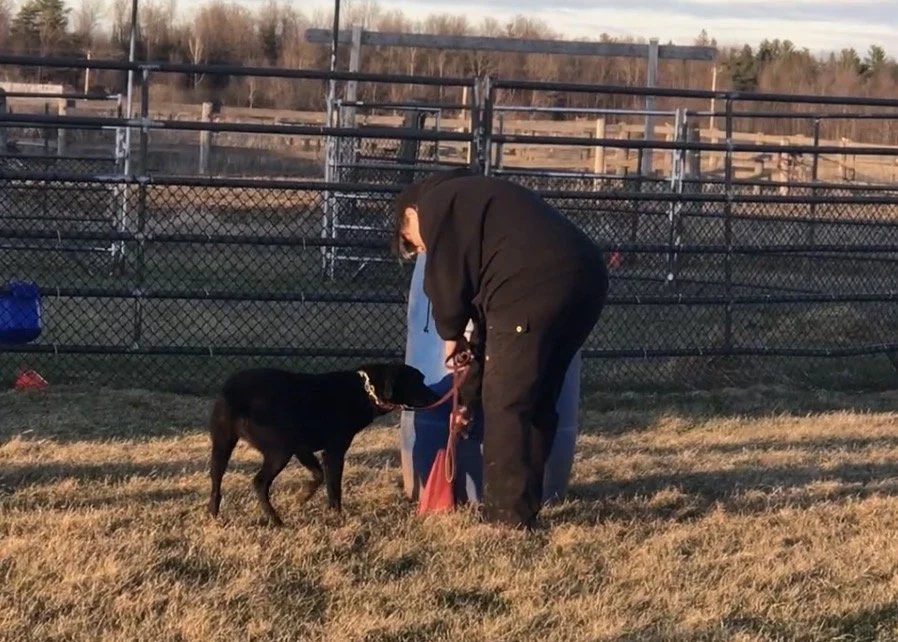
Dogs know when you’re faking it
You can’t fake it till you make it with dogs.
You can’t pretend to be interested when you’re actually annoyed.
You can’t pretend to investigate when you’ve already decided your dog is being ridiculous.
You can go through all the motions, but if your actions and your thought process don’t match, your dog may feel that incongruence.
And trust becomes harder.
This doesn’t mean you need to be perfectly calm all the time. Please. If perfect calmness were required, I would have been disqualified from dog training years ago.
It means your communication needs to be honest enough for your dog to understand.
If you walk toward the window while thinking, Why am I still listening to that dumb Tracy girl? I can’t believe I have to get up again, your dog may notice that your body is saying “I’m here with you,” while your energy is saying “I wish you would stop.”
That mismatch creates uncertainty.
Your dog is not responding to your performance.
Your dog is responding to the whole of you.
Why dog training recipes feel so safe
I understand why we want recipes.
We want:
Five steps to stop dog barking.
Three steps to stop pulling.
The exact words to use when our dog gets scared.
A simple answer for why our dog reacts.
Dog training tips that actually work every time.
And, honestly, I know that “three steps to…” episodes get clicked more often. I see the numbers. I am not above looking at the numbers and saying, Oh, people really like a tidy list.
Recipes feel safe because they give us something to do.
Sometimes, you absolutely do need a starting point. Protocols can help you begin. They can give you structure when you feel overwhelmed.
But dog training cannot be a rigid recipe.
Your dog is not a robot dog.
A protocol should help you understand the conversation. It should never replace the conversation.
The same exercise will look different with ten different dogs. Even the same dog may respond differently depending on the environment, the day, their stress level, your stress level, or whether you’ve just had a terrible day at work.
That’s why positive dog training and dog behavior modification need to include observation and adjustment, not just repetition.
Our mantra inside the Fearless Framework is:
> We’re going to try it, we’re going to test it, and then we’re going to tweak it, and we’re going to be okay with that.
If a decision doesn’t work, notice the outcome and move on.
No beating yourself up.
No declaring the entire method a failure.
Just, How interesting. What did my dog tell me? What can I try differently next time?
Don’t memorize me, understand your dog
I don’t want you to memorize me.
I don’t want you standing in your living room thinking, What would Tracy do?
I want you looking at your dog and knowing what to do.
Why?
Because I don’t live with your dog. You do.
You can learn the tiny changes in their posture. You can notice the expression they make before they react. You can recognize when they are mentally with you and when they are only physically present.
You can learn your dog’s body language signs in a way no general training video can teach you.
Ask yourself:
Why am I communicating this?
What am I looking for from my dog?
What is my dog communicating back?
Does my dog need more space, more clarity, more support, or a break?
That is how you move beyond obedience.
This applies to every training exercise
You can perform a perfect “follow me” exercise without checking whether your dog is mentally with you.
You can perform a “be with” session while secretly counting down the minutes until it’s over.
You can perform approach-and-retreat while being so committed to completing the exercise that you miss your dog saying, “That’s enough.”
You can have the right leash, treats, timing, words, and stance, and still not actually be with your dog.
That is why the best loose leash walking tips are not only about where your hands go. They are about noticing your dog’s attention, emotional state, and ability to participate.
The best advice for how to calm an anxious dog is not simply “do this sequence.”
It is learning to recognize when your dog is coping, when they are overwhelmed, and when you need to change your plan.
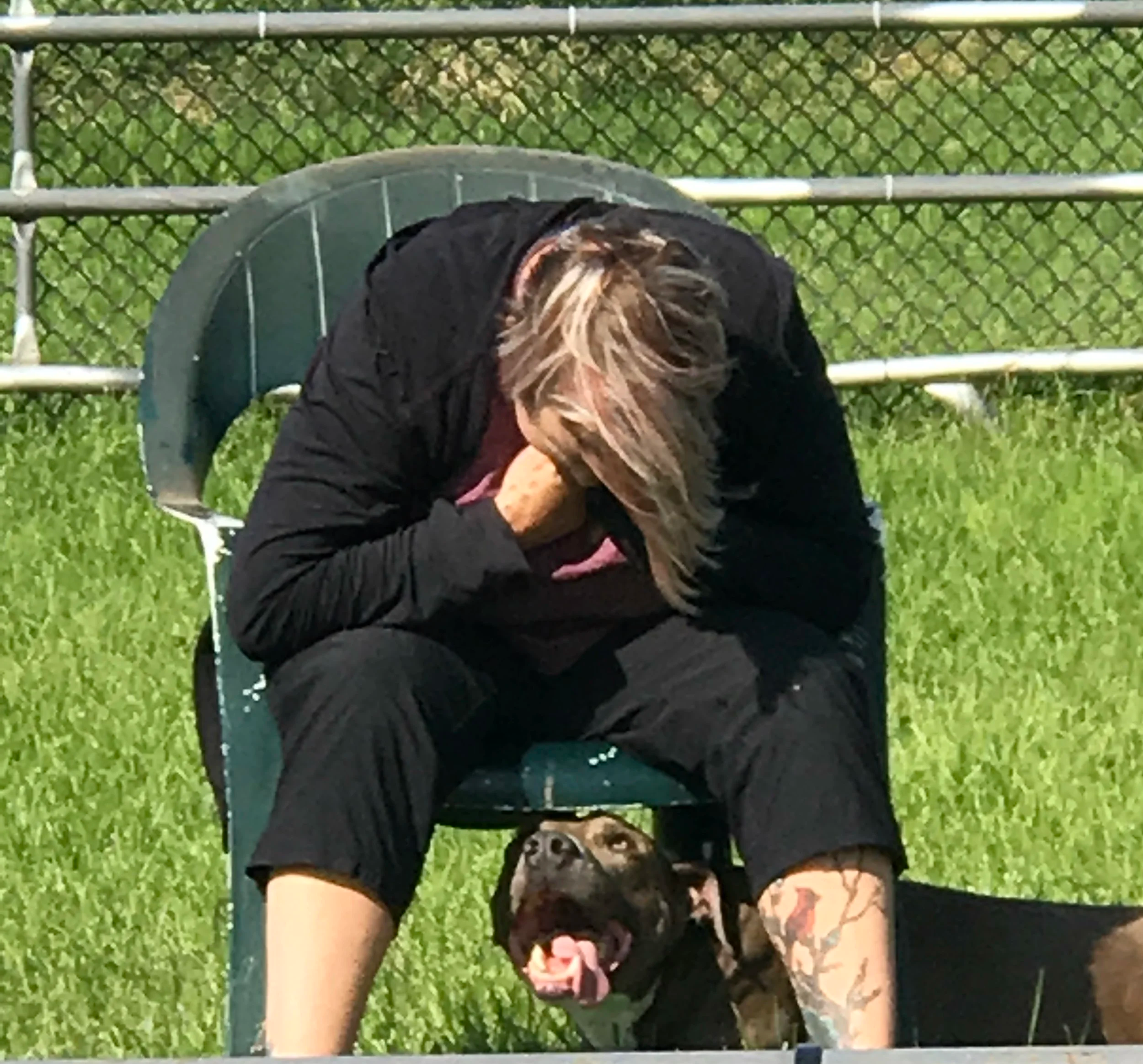
Training should start looking less like training
Here’s the strange goal of this work:
Over time, dog training should start looking less like dog training.
I want it to look like life.
I want someone watching you and your dog to almost not notice what you’re doing because you are not constantly managing, cueing, correcting, or performing an elaborate technique every time your dog looks at something interesting.
You are communicating.
You are noticing.
You are responding.
You are influencing.
Your dog communicates, and you respond. You communicate, and your dog responds.
That is a relationship.
And relationships are not scripts.
Try this the next time you train
The next time you do something you learned with your dog, pause for a moment.
Ask yourself:
Why am I doing this?
What am I trying to communicate?
What is my dog communicating back to me?
If you can’t answer those questions, you may be performing an exercise instead of participating in the conversation.
And please don’t use that as another reason to feel guilty.
Just notice.
How interesting.
That moment of noticing is where change begins.
You don’t need to become a dog trainer
You do not need to understand every technique, memorize every piece of terminology, or manage your dog perfectly for the rest of their life.
You need to understand the dog in front of you.
That is what we work on inside the Fearless Framework: understanding what is underneath the behavior, building trust, and learning how to respond with clarity and confidence.
You’ll have support, coaching, and community as you apply the ideas to your real life: especially when life gets lifey.
And eventually, I want you to need me less because you understand your dog more.
Still friends forever, obviously.
If you’re not sure whether the Fearless Framework is right for you, send me a message. We can talk it through without pressure.
You can also join our Living Beyond Obedience Facebook group and walk this journey with other dog lovers who understand how complicated it can feel.
Listen to the full episode
You are not alone.
You do not need another list of tricks to try while feeling more confused.
You need a relationship built on trust, shared experiences, and clear communication.
Here for you, friend. 🐾
Be the person your dog thinks you are.
Frequently asked questions
Why isn’t my dog training working?
Your dog training may not be working because you are focusing on completing the technique rather than understanding what your dog is communicating. The environment, emotional state, timing, and relationship all affect how an exercise works. Try it, test it, notice the outcome, and adjust.
Is it bad to follow dog training steps exactly?
No. Following steps can give you a helpful starting point. The problem is treating those steps as a rigid script. Use a protocol to support communication, not replace your observation of your dog.
How do I really communicate with my dog?
Start by noticing your dog’s body language, emotional state, posture, facial expressions, and behavior before, during, and after your interaction. Then respond in a way that makes sense in context. Communication is a two-way process.
Why does my dog listen at class but not at home?
Training classes usually take place in controlled environments with predictable distractions. At home or outdoors, the environment, your dog’s stress level, and your own energy may be different. A behavior learned in class still needs to become meaningful in everyday life.
What should I do when a training technique doesn’t work?
First, pause and observe. Ask what your dog’s behavior is telling you. Consider whether the exercise is too difficult, the environment is too distracting, or your dog needs more space or support. Then adapt your approach rather than forcing the same technique.
Do I need to be a dog trainer to help my dog?
No. You do not need to become a dog trainer. You need to learn how to understand your individual dog, communicate clearly, and respond to their needs. The goal is not to perform training perfectly: it is to build a relationship you can both rely on.