Why Training Isn't Where to Start With a Fearful Dog
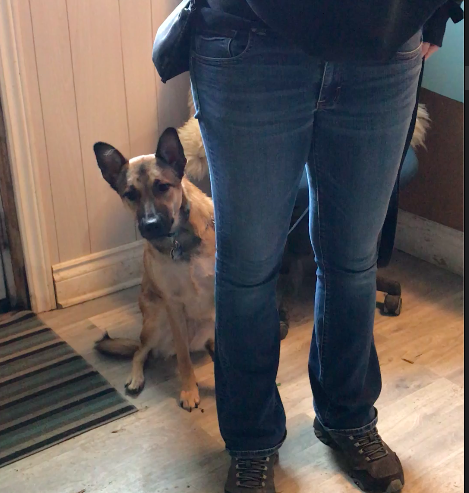
If you have a fearful, anxious, reactive, or simply unconfident dog, you’ve probably been told to build their confidence.
Train them.
Teach them new behaviours.
Give them challenges to overcome.
Expose them to new experiences.
Because training builds confidence, right?
Well… sometimes.
But that’s not where I would start.
Before I want your dog to believe, “I’ve got this,” I want them to believe, “You’ve got me.”
Those are two very different things.
And if your dog is afraid, the second one may be the most important place to begin. 🐾
Why training may not be the first answer for a fearful dog
I know how tempting it is to look at a fearful dog and think:
How do I make you braver?
How do I get you comfortable around people?
How do I help you walk past other dogs?
How do I stop you reacting to that noise?
How do I change what’s happening inside you?
I understand that urge.
When your dog is struggling, you want to help. You want a plan. You want something you can do immediately so both of you can feel better.
But here’s my gentle contrarian opinion:
A fearful dog does not necessarily need more obedience training first. They may need more evidence that you are someone they can trust.
You can teach a dog to sit, stay, heel, place, touch, or come.
They may perform every one of those behaviours beautifully in a quiet room.
And then a stranger walks toward them, or another dog appears, and their entire system falls apart.
That’s because competence and confidence are not the same thing.
A dog can become competent at performing behaviours without developing the deeper belief:
“I can handle what happens next.”
Fearful dog training needs to address the emotional experience underneath the behaviour, not only what the behaviour looks like from the outside.
Confidence is the result, not the assignment
When I talk about dog confidence building, I’m not talking about creating a dog who is confident because they know how to perform a list of commands.
I want a dog who can move through the world with you.
A dog who can notice something unexpected, look to you, process what’s happening, and eventually think:
“I can figure this out.”
That kind of confidence is built through relationship and shared experience.
It grows when your dog collects evidence that:
You are paying attention.
You listen when they communicate.
You will not repeatedly put them into situations they cannot handle.
You make decisions when things become difficult.
You remain reasonably steady when they are struggling.
You help them leave when they need more space.
Confidence doesn’t appear because you completed a confidence-building exercise.
It grows from hundreds of successful moments.
That is why the order matters.
The three-step progression for helping a fearful dog
Inside the Fearless Framework, I teach a three-step progression.
It is the heart of how I approach fearful dog training, reactive dog training, and dog behavior modification.
Step 1: Your dog learns to trust you
Before your dog needs to trust themselves, they need to learn that you are worth following.
This does not mean your dog simply loves you.
Your dog may adore you and still not trust your decisions.
Love is an emotion.
Trust is built through experience.
Can your dog trust that you notice when something is uncomfortable?
Can they trust that you will listen when they communicate?
Can they trust that you will advocate for them when someone approaches too closely?
Can they trust you to make a clear decision instead of freezing, panicking, or becoming swept up in their reaction?
This is where leadership begins.
Not with constant commands.
Not with trying to control every movement.
Leadership means being present, predictable, responsive, and clear.
And predictable does not mean acting exactly the same way in every situation.
It means your response makes sense in context.
Sometimes clarity is quiet.
Sometimes it means creating space.
Sometimes it means moving between your dog and a person.
And sometimes, if safety requires it, it means an urgent change in energy or voice.
You do not have to be perfectly calm every second. You do need to be understandable.
Step 2: Your dog learns to trust the situations you help them navigate
Once your dog begins to trust you, your relationship becomes a bridge between them and the world.
You are part of every situation they experience.
So if your dog is afraid of people, I would not simply throw people at them and call it exposure.
That can overwhelm them.
Instead, I want to create experiences where your dog learns:
> “When you put me in this situation, you pay attention. You give me space. You don’t ask too much. You help me leave when I need to leave.”
If someone is approaching and your dog is clearly uncomfortable, you don’t have to say:
“They’re friendly.”
“She’s nice.”
“You’ve met her before.”
You can simply notice what your dog is telling you and respond.
“I see you. This is hard for you. Let’s figure it out.”
You don’t know what you don’t know.
Maybe your dog has seen that person before, but something smells different today.
Maybe there is a new sound, movement, or environmental change you cannot detect.
Even something familiar, like a fire hydrant, may feel different because of information your dog is noticing that you cannot.
Instead of dismissing the fear, get curious.
How interesting. What changed?
Avoid the two extremes
When people see a fearful dog, they often move toward one of two extremes.
The first is coddling:
> “It’s okay. You’re okay. Oh my goodness, you poor thing.”
The second is dismissal:
> “It’s just a fire hydrant. Why are you scared?”
Neither response gives the dog useful information.
One can communicate panic and helplessness.
The other can communicate that their experience does not matter.
A more helpful response is:
“I see you. I know this is difficult. I’m going to help you.”
That is not about making the world disappear.
It is about showing your dog that you are paying attention and that their communication changes what happens next.
Step 3: Your dog learns to trust themselves
At first, your dog may need to borrow your confidence.
What if, instead of bribing them past something with food, you went first?
You become the beacon.
You say, through your actions:
“I’m going to go through first. I’ll show you what happens. You can come when you’re ready.”
Each time your decisions help your dog successfully navigate something, they collect another piece of evidence.
I noticed it.
I was afraid.
My person helped me.
I got through it.
Another successful experience.
Another moment of, “I didn’t die.”
Another small layer of trust.
Eventually, your dog may need less support.
They may notice something unfamiliar, look at you, and then take a step forward on their own.
That is where confidence begins to emerge.
Not because you forced bravery.
Not because you made them approach.
Because they have developed evidence that they are capable too.
Trust is a bridge to independence
I want to be very clear about this:
The goal is not to make your dog dependent on you.
That can feed our human ego. It feels good when our dog seems to need us for everything.
But that is not the destination.
The relationship is a bridge to independence.
First:
Trust me.
Trust the situations I help you navigate.
Trust yourself.
As your dog becomes more capable, your role should become smaller.
That is success.
I saw this progression with Levi, a dog who was deeply uncomfortable around people. We began by building trust between us and making sure he knew I would protect his space.
Then we carefully introduced situations where he could experience people without being overwhelmed.
Over time, he learned to trust the environments I brought him into.
Eventually, he approached a person on his own.
The dog who once avoided humans had developed enough evidence to make that choice for himself.
That is the kind of confidence I want for your dog.
A simple recipe for helping a fearful dog
If you’re wondering where to begin, ask yourself these three questions:
Step 1: Does my dog trust me here?
Are you paying attention?
Are you responding to their dog body language signs?
Are you willing to create space instead of insisting that they cope?
Step 2: Have I given my dog enough successful experiences?
Have they repeatedly experienced this situation without being overwhelmed?
Or are you expecting them to trust something after only one difficult attempt?
Step 3: Am I giving my dog opportunities to discover what they can handle?
Once your dog has enough support, can you allow them to make small choices?
Can you notice when they are ready to try something independently?
Please don’t rush to the final question.
Sometimes we are so desperate to reach, “I’ve got this,” that we skip the essential foundation:
“You’ve got me.”
Frequently asked questions about fearful dog training
Why isn’t training building my fearful dog’s confidence?
Training may be teaching your dog to perform behaviours without changing how they feel. A dog can know several obedience cues and still feel unsafe around people, dogs, or unfamiliar situations. Start with trust, safety, communication, and successful experiences.
What should I do first with a fearful dog?
Begin by becoming a predictable and responsive partner. Notice what your dog is communicating, reduce unnecessary overwhelm, create space, and help them navigate situations they cannot yet handle alone.
How do I help my fearful dog trust me?
Trust grows through repeated experiences. Listen to your dog’s signals, make decisions, protect their space, and avoid forcing them into situations that are too difficult. Your dog learns from what happens after they communicate discomfort.
Does exposure help a fearful dog?
Exposure can help when it is gradual, carefully managed, and does not overwhelm the dog. Forced exposure or flooding can make fear worse. The goal is not simply to put your dog near a trigger, but to help them experience the situation safely with appropriate support.
How long does it take to build a fearful dog’s confidence?
There is no universal timeline. Progress depends on your dog’s history, temperament, triggers, health, and the consistency of your shared experiences. Look for small changes rather than expecting one dramatic breakthrough.
Should I comfort my scared dog?
You can support your dog without reinforcing panic or dismissing their fear. Stay connected, acknowledge what they are experiencing, create space, and help them move through the situation. You can be warm and reassuring while still being clear.
You don’t have to walk this journey alone
If you’re tired of guessing what your fearful or anxious dog needs, the Fearless Framework can help you understand the progression from trust to confidence.
You’ll learn how to read your dog, build communication, create successful experiences, and respond with more clarity when life gets lifey.
You can also join the supportive Living Beyond Obedience Facebook group and connect with other dog lovers who understand how complicated this journey can feel.
If you have questions about your dog’s situation, you’re welcome to reach out through the contact page.
And if you’d like to listen to the full conversation, you can find Episode 237 of the Beyond Obedience podcast on Apple Podcasts.
Here for you, friend. 🐾
Before your dog can believe, “I’ve got this,” they may need to believe, “You’ve got me.”
Build that first.
Prove it gently.
Prove it consistently.
And one day, through all those shared experiences, “you’ve got me” may become “I’ve got this.”
Be the person your dog thinks you are.