Is Your Dog Mirroring YOU? What Their Behaviour Might Be Trying to Tell You

Have you ever looked at your dog and thought, What is going on with you?
Maybe your dog has suddenly become more reactive. Maybe they are barking more, following you everywhere, unable to settle, or refusing to come when called.
And if you’re already tired, worried, or second-guessing yourself, those changes can feel like one more thing you have to fix.
But what if the behaviour driving you crazy isn’t only about your dog?
What if your dog is reflecting something back to you?
This does not mean you caused your dog’s anxiety or reactivity. It means your dog lives in relationship with you, and that relationship is part of the bigger picture.
Sometimes, your dog’s behaviour is giving you information about what is happening inside them, around them, and between the two of you.
Your dog does not live in a vacuum
When a dog starts barking, lunging, chewing, avoiding, or refusing to settle, we often look directly at the dog.
How do I stop this?
How do I fix the reactivity?
What training does my dog need now?
Those are understandable questions. I have asked them myself.
But behaviour does not happen in isolation. Your dog is part of a system that includes:
Your dog
Their environment
You
The relationship between you
All four pieces influence what happens next.
That means effective reactive dog training, fearful dog training, and dog behavior modification need to look at more than the visible behaviour.
A dog may be more reactive around other dogs. A change in the home may make them unsettled. Your own stress may change how you move, speak, breathe, and respond.
When we look only at the dog, we miss the full picture.
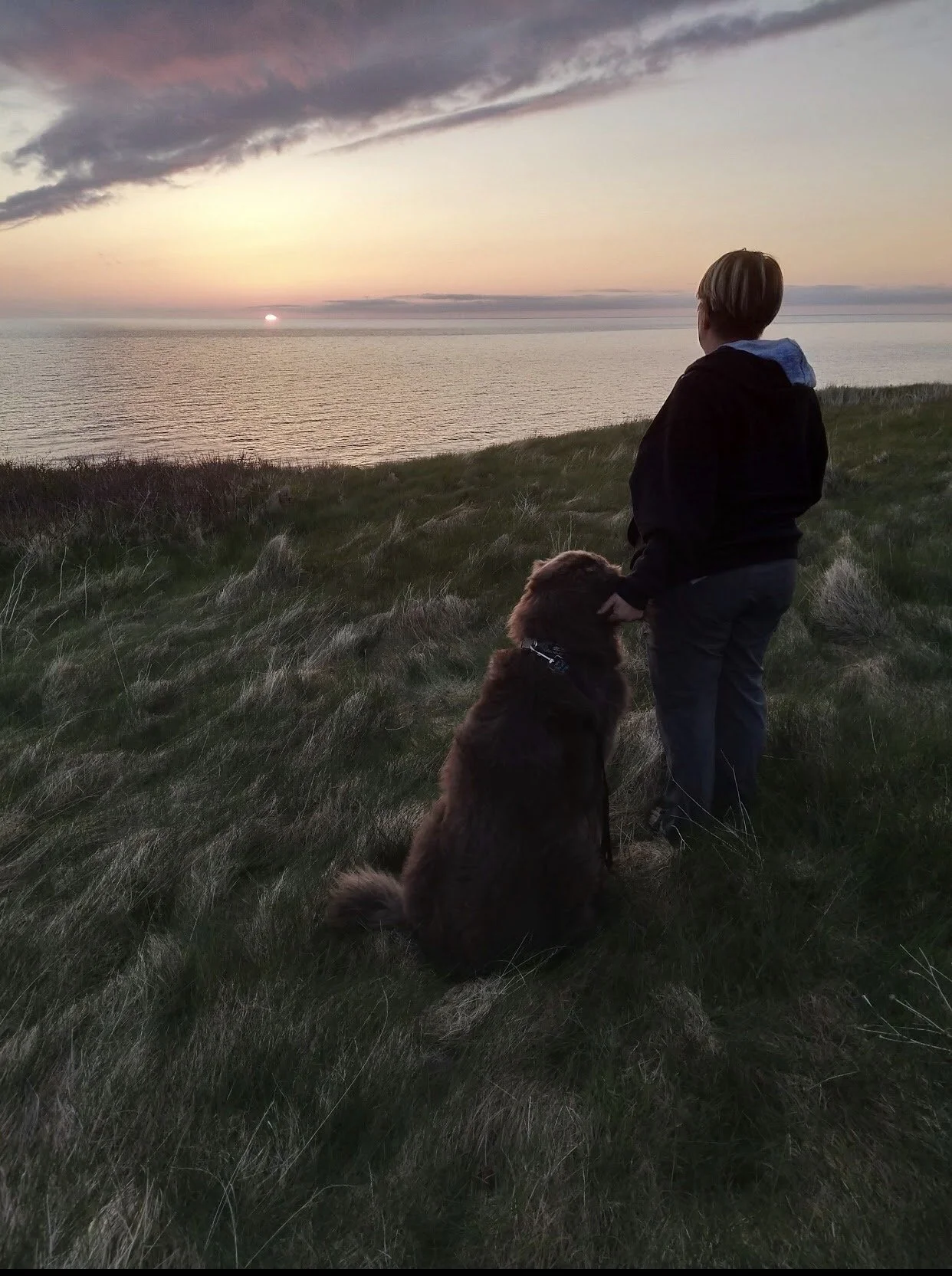
“Dogs can smell your thoughts”, but what does that mean?
I sometimes say that dogs can smell your thoughts.
No, your dog does not know that you are worried about a bill, replaying an argument, or thinking about everything you need to do tomorrow.
They do not know the whole story inside your head.
But they can notice that something has changed.
Your dog may be reading:
Changes in your breathing
Tension in your muscles
Your posture
The speed and direction of your movement
Your facial expression
Your voice and tone
How tightly you hold the leash
Changes in your scent and chemical profile
Your words might say, “I’m fine. Everything’s fine.”
But the rest of your body may be communicating something very different.
Your dog does not understand the reason for that discrepancy. They simply experience it as information:
Something isn’t lining up here.
That uncertainty can be especially difficult for a dog who already struggles with fear, anxiety, or unpredictability.
Incongruency can make the world harder to understand
Imagine that you are trying to follow someone’s directions.
They say everything is safe, but their body is tense. Their voice is sharp. They keep looking over their shoulder. Their movements are abrupt.
Would you feel completely confident?
Probably not.
Your dog can experience something similar when your words say one thing, but your body and behaviour say another.
You might be saying, “Come on, it’s okay,” while holding your breath and tightening the leash.
You might be asking your dog to settle while your own movements are rushed and your voice is becoming more frustrated.
Your dog does not need to understand why you are overwhelmed. They simply know that the person they rely on is communicating mixed signals.
This is one reason clarity matters so much in dog training.
The goal is not to be calm every second of every day. That is not realistic, and honestly, it would be a little strange.
The goal is to be present, predictable, responsive, and clear.
Predictable does not mean you respond identically in every situation. It means your response makes sense in context.
If there is an urgent safety concern, your voice may become firmer. Your energy may change quickly. You may need to move decisively.
That is not a failure of calmness.
That is clarity.
The Echo story: the moment I realized I was not okay
In 2019, my father passed away unexpectedly.
I lived in Nova Scotia, while my parents were in Ontario. After I found out, I went straight into go-go-go mode.
I had to travel. I had to organize things. I had to show up for my family. I had to make sure my children were okay.
So I did what many of us do when life becomes too much.
I kept moving.
I told everyone I was fine.
I told myself I was fine.
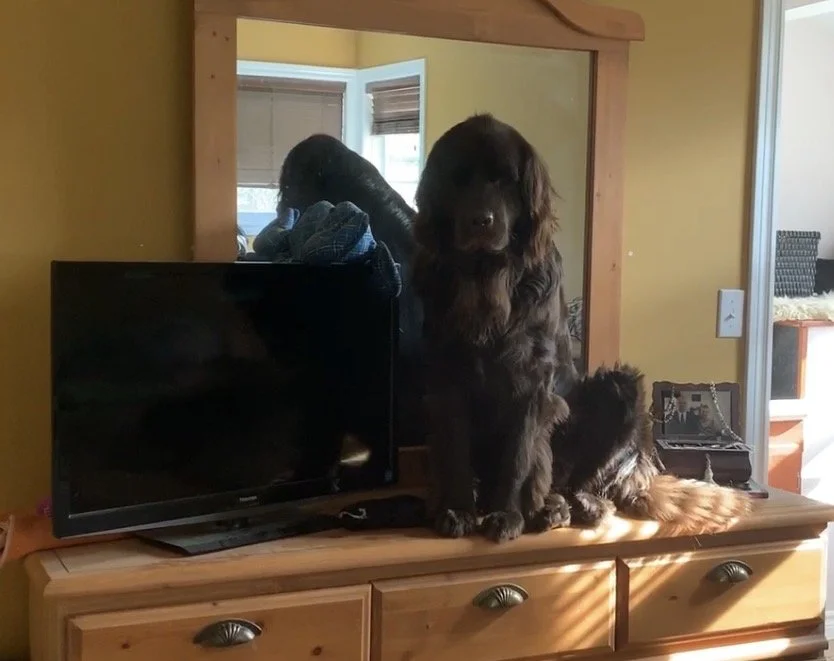
And then one day, I walked into my bedroom and saw my Newfoundland, Echo, sitting on top of my dresser beside the television.
Echo was not a dog who jumped on things. She was not exactly known for her athleticism unless she was rescuing someone from the water.
Yet there she was.
Sitting on the dresser.
Looking confused.
She had not knocked over the television. She had not destroyed my jewelry box. She was simply perched there, as if she had no idea how she had ended up in that position.
I remember looking at her and thinking, What is actually happening right now?
And then I realized:
I am not okay.
I had been walking around saying I was fine when I was carrying enormous grief.
Echo did not know the story. She did not know that my father had died. She did not understand why I was trying so hard to keep functioning.
But she knew something about me had changed.
Her behaviour became the signal I needed to stop, pay attention, and admit that I needed support.
That moment still means a lot to me.
How stress and uncertainty may show up in your dog
Every dog is different. Your dog’s behaviour is not a perfect emotional mirror, and you should never assume that every change is caused by your feelings.
Pain, illness, genetics, past experiences, sleep, environment, and specific triggers all matter too.
Still, you may notice changes such as:
More barking or vocalizing
Chewing or getting into things
Difficulty settling
Increased clinginess
Avoiding you or moving away
Refusing to come when called
More leash reactivity
Freezing, hiding, or shutting down
Seeming generally unsettled
Sometimes a dog who does not come back when called may not be “being stubborn.”
They may be communicating something closer to:
Something feels wrong around you. I’m going to stay over here for now.
That does not mean your dog has diagnosed your emotional state. It means their behaviour may be responding to a shift they can feel but cannot explain.
The feedback loop between a reactive dog and a frustrated human
Here is how the cycle can develop:
Your dog starts barking.
You become irritated or worried.
Your breathing, posture, voice, and movement change.
Your dog notices and becomes more unsettled.
Your dog barks more.
You become even more frustrated.
Round and round you go.
Sometimes we are waiting for the dog to change so we can feel better, while the dog may be waiting for us to change so they can feel better.
This is not a character flaw in either of you.
It is a feedback loop.
Research into emotional contagion and human-dog stress patterns also suggests that dogs can be influenced by the emotional states of the people they live with. You can read more about this research in Frontiers in Psychology and this peer-reviewed study on human-dog emotional contagion.
The important part is not finding someone to blame.
The important part is finding somewhere to begin.
This is not about blaming yourself
Please hear me clearly:
You are not the problem.
Being part of your dog’s environment does not mean you caused their reactivity, fear, or anxiety.
It means you have influence.
And influence gives you somewhere to go.
You are allowed to feel sad, angry, frustrated, worried, distracted, and overwhelmed. You are a human being. Your dog does not need you to hide every emotion or become a perfectly calm person who never has a difficult day.
Stability does not mean being flat or dead inside.
It means you are not constantly asking your dog to make sense of chaos without support.
It means you notice when you are not yourself and adjust the plan when needed.
Three questions to ask when your dog’s behaviour changes
The next time your dog seems “off,” try replacing What is wrong with my dog? with:
1. What has changed for my dog?
Consider triggers, pain, sleep, routine, environment, visitors, weather, and recent experiences.
2. What has changed for me?
Have you been grieving, stressed, sick, distracted, overwhelmed, or emotionally stretched thin?
3. What has changed between us?
Has communication become rushed? Have you been asking for more? Have you both been caught in a cycle of frustration?
This is not an invitation to overanalyze every interaction.
It is simply a way to become curious.
How interesting.
Maybe today is not the day for a busy walk in town.
Maybe your dog needs more distance, quiet time, sniffing, rest, or connection.
Maybe you need to simplify, lower your expectations, and take a decompression day.
Sometimes the behaviour you desperately want to disappear deserves to be listened to first.
Leadership means helping your dog make sense of the world
Real leadership is not constant obedience.
It is not proving that your dog will respond perfectly no matter what is happening.
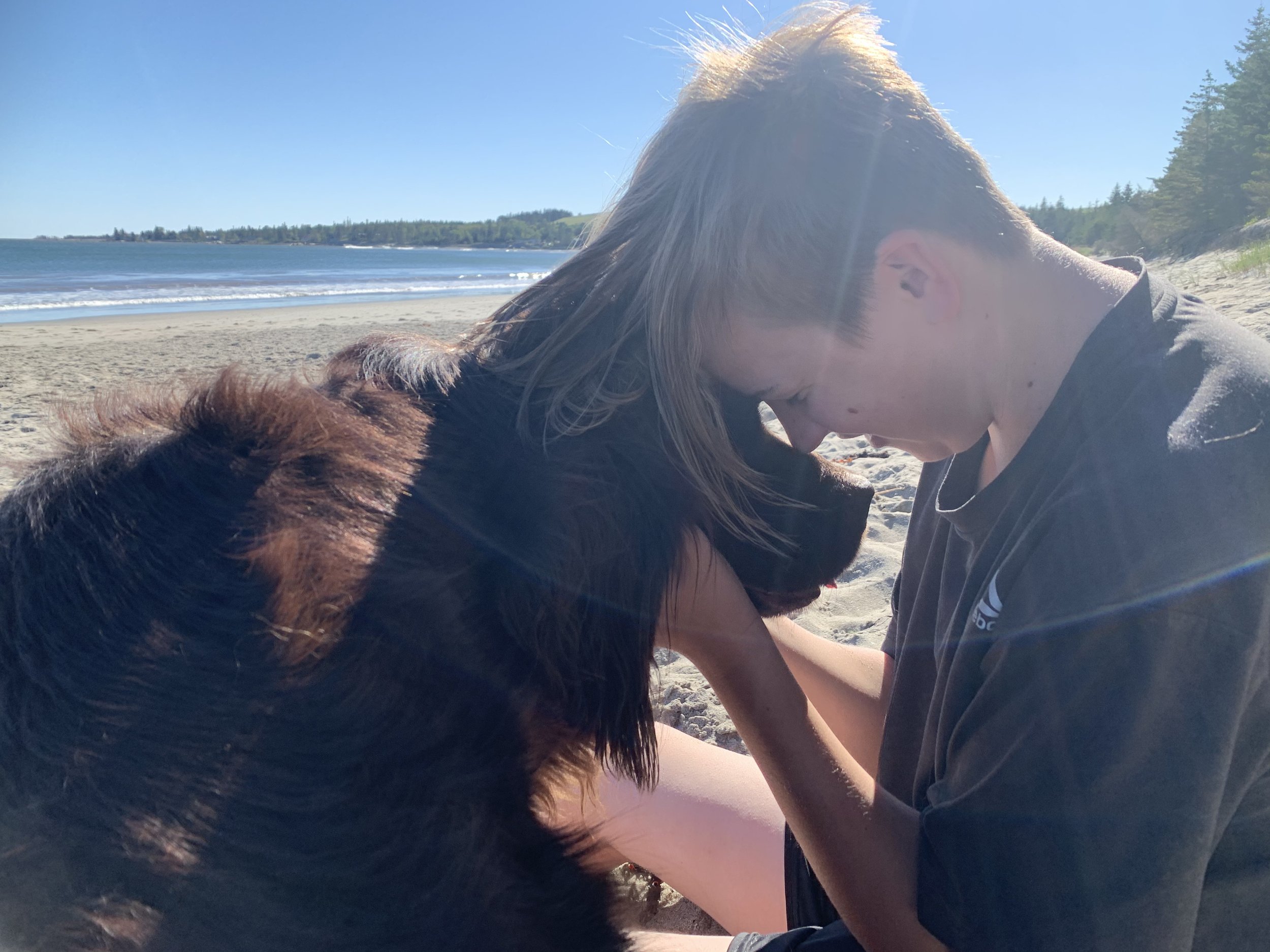
Leadership means becoming someone your dog can rely on.
You are present.
You are responsive.
You are willing to adapt.
You give your dog information that makes sense in context.
You create safety where you can, and you make clear decisions when you need to.
This is the heart of Be what you want the dog to be.
If you want your dog to become more thoughtful, practise thoughtfulness.
If you want your dog to be willing to adapt, be willing to adapt yourself.
If you want your dog to trust you, keep showing them that you are paying attention.
You do not have to walk this journey alone. 🐾
Ready to build more trust with your dog?
If your dog’s fear, anxiety, or reactivity has left you exhausted, I want to invite you into a different kind of training journey.
The Fearless Framework helps you understand what your dog is communicating, build trust, and become more confident in how you show up together.
Step 1: Join the community
Connect with other dog lovers inside the free Living Beyond Obedience Facebook group.
Step 2: Learn to see the whole picture
Notice your dog, the environment, yourself, and the relationship between you.
Step 3: Get support when you need it
If you are struggling with dangerous behaviour, please contact a qualified professional in your area for hands-on support. You can also contact Beyond Obedience to explore the right next step for you and your dog.
You can listen to Podcast Episode 231 on Apple Podcasts for the full conversation.
Your dog may be reflecting something back to you.
Not as criticism.
Not as blame.
As information.
So pause. Get curious. Look at the whole picture.
What is happening with your dog?
What is happening with you?
What is happening between you?
And remember: your dog already thinks you are amazing.
Now go be the person your dog thinks you are. 🐾
Tracy XOXOX
Frequently asked questions
Do dogs really mirror their owners’ emotions?
Dogs can notice and respond to changes in human breathing, posture, movement, voice, facial expression, and scent. Their behaviour may be influenced by the emotional environment they share with us, but mirroring is not a perfect or one-to-one reflection.
Can my stress cause my dog to become reactive?
Your stress does not automatically cause your dog’s reactivity. Your emotional state is one part of a larger system that may also include genetics, health, past experiences, environment, and triggers. Becoming aware of your influence can help you change the feedback loop without blaming yourself.
What are common dog body language signs of stress?
Dog body language signs can include freezing, hiding, moving away, avoiding eye contact, pacing, panting, lip licking, increased barking, stiff posture, or difficulty settling. Always consider the full context and your individual dog.
How can I calm an anxious dog?
To help calm an anxious dog, begin by reducing pressure and increasing predictability. Create distance from triggers, simplify the environment, use a steady voice, allow decompression, and avoid forcing your dog into situations they cannot handle. A veterinarian or qualified behaviour professional can help if anxiety is severe or worsening.
Is this approach a replacement for reactive dog training?
No. Awareness of your own emotions is one helpful part of a broader plan. Effective reactive dog training should also address your dog’s needs, triggers, environment, safety, communication, and ability to recover.
Does my dog need me to be calm all the time?
No. Your dog does not need a perfectly calm human. They need you to be aware, clear, responsive, and willing to adjust. Being emotionally stable means helping your dog make sense of what is happening( not pretending that you never have emotions.)