Stop Searching for the "Magic" Leash: Why Tools Aren't Solving Your Walking Problems
Are you like me?
Do you find yourself scrolling through Facebook or Instagram, melting over those cute dog videos?
The tiny paws, the goofy tilts... it’s pure cuteness overload.
But lately, I’ve noticed something shifting in the algorithm.
If you’re a dog lover like me, I bet you’ve seen them too.
Those weird, cartoony advertisements for "miracle" training equipment.
The ones that personify the tools, and the dogs, in a way that feels... well, a little disturbing.
I’m feeling a bit spicy today, so hang onto whatever you need to hang onto.
Gird your loins, friend.
We’re talking about tools, and why they aren't the magic fix you've been promised.
The Guilt Trap in Your Newsfeed
Have you seen the ads where the harness "talks" to you?
Or the ones where the dog looks into the camera with giant Disney eyes and says, "When I run away, it's because the harness you put on me hurts so bad"?
Honestly, it makes me upset.
It’s repulsive marketing designed to make you feel like a terrible human being.
It suggests that if you just bought this specific harness, your dog would suddenly be perfect.
But here’s the truth: Your marketing-induced guilt isn't going to train your dog.
I spend most of my days trying to convince my students (and myself!) that we are good people.
We are doing the best we can with the information we have.
When we know better, we do better.
You don’t need a "friendly" cartoon to tell you otherwise.
What is a "Tool," Anyway?
Before we get too deep, let’s clear one thing up.
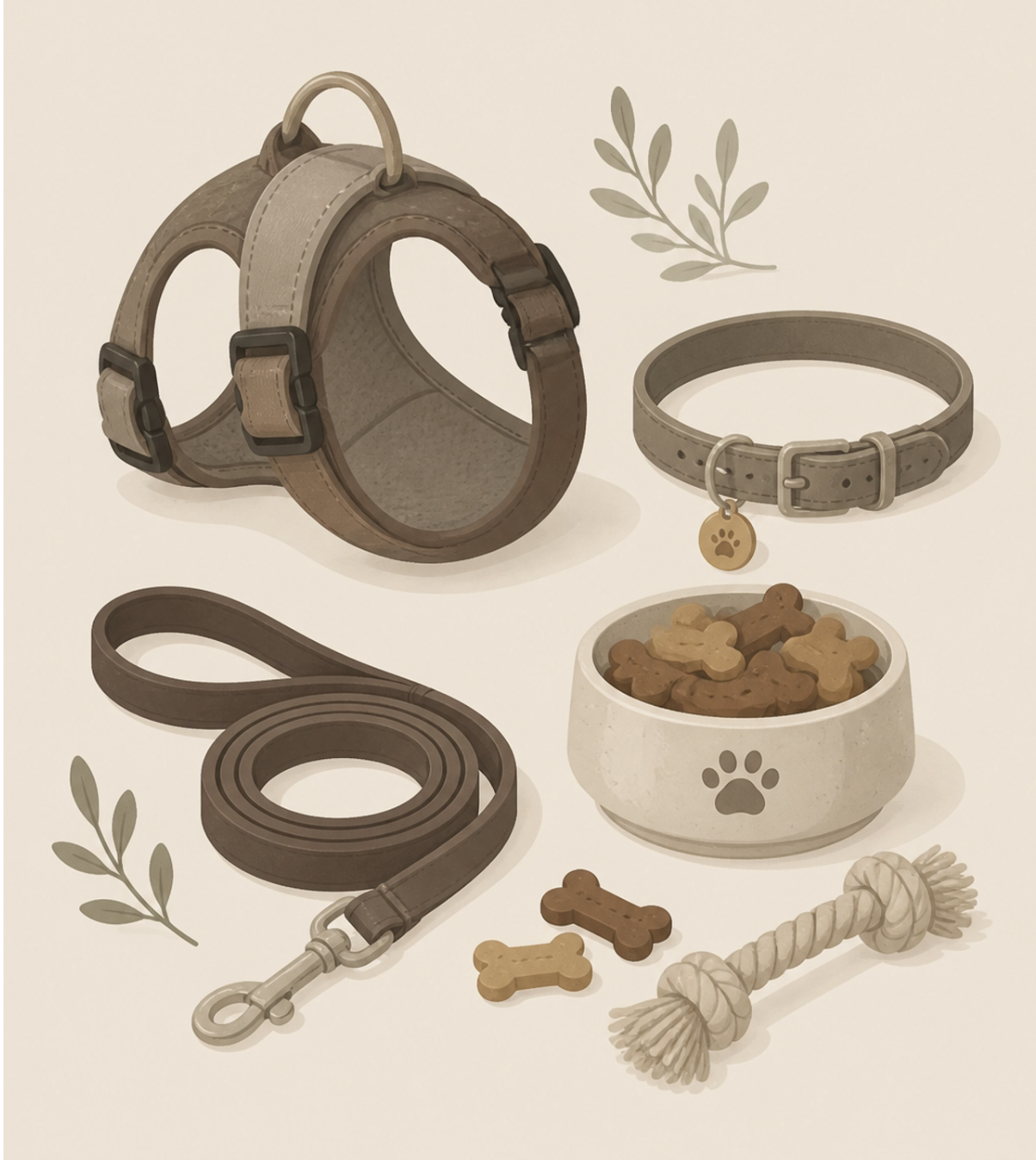
Everything you use with your dog is technically a tool.
Flat collars? Tool.
Harnesses? Tool.
Long lines, slip collars, head halters? Tools.
Even treats are tools.
They are all just things we use to amplify a result we want.
But here’s the kicker: None of them are magic.
All of them can be used incorrectly, and none of them can create trust out of thin air.
Are you worried that you're relying too much on your gear?
Imagine if you didn't have to stress about which clip went where.
Imagine if the gear was just... gear.
Leverage vs. Connection
A tool can create leverage.
It can bridge a gap in communication because, let’s face it, we are different species.
We see the world; they smell it. There’s a big gap there.
Tools can slow a dog down or keep you safe.
But a tool cannot create trust.
It’s not influential, and it doesn’t build connection.
The real goal shouldn't be finding the equipment that keeps your dog near you.
The goal is becoming someone your dog actually wants to stay near.
The Mexico Lesson: No Shame in the Game
I want to be 100% transparent with you.
I don't hate tools. In fact, I’ve used them all.
Years ago, I had a bit too much fun on a trip to Mexico.
When in Rome, right?
I ended up falling and wrecking my shoulder. Hard.
I couldn’t stop doing my job. I still had pack walks to do.
So, I put some of my stronger dogs back on training tools.
I needed that leverage for my own safety while I recovered.
There is zero shame in that. 🐾
If you need a tool to keep you safe while you work on the deeper stuff, that is okay.
But you have to recognize that the tool is the support, not the solution.
If I hadn't worked on my relationship with those dogs before that injury, no tool in the world would have saved my shoulder.
Why Your Dog Hates the Head Harness
Let's talk about the "PC" tools, like the head halter or gentle leader.
People love to compare them to horse halters.
"If it works for a 2,000lb horse, it'll work for your dog!"
But there’s a massive difference between a prey animal (horse) and a predator (dog).
When you put something over a dog’s nose, you are touching the "business end."
That nose and mouth are their main form of defense.
If you haven't proven to your dog that you have their back: that you see the threats and can handle them: they are going to feel incredibly vulnerable with you controlling their defense system.
That’s why they "alligator roll" or try to claw their faces off.
It’s not just "annoying" to them; it’s a survival concern.
Are you partnering with your dog in survival, or are you just strapping things to their face?
You Are the Biggest Tool in Your Toolkit
(And I mean that in the best way possible!)
The most important thing you can work on isn't the leash or the harness.
It’s you.
Can you be the most influential thing in your dog’s life?
When you focus on being a calm, confident leader, everything else becomes "gravy."
The treats? Gravy.
The gear? Gravy.
When you understand why your dog stopped listening, you stop looking for the magic leash and start looking at the connection.
How to Move Forward (Step-by-Step)
If you're feeling overwhelmed by the barking, the lunging, and the pull-your-arm-off walks, here is your path forward:
Acknowledge the Gap: Realize that your current tools are just managing the behaviour, not changing how your dog feels.
Ditch the Guilt: Stop listening to marketing that makes you feel like a "bad" owner for needing leverage.
Build the Foundation: Focus on trust and connection inside the house before you try to tackle the "scary" outdoors.
Seek Influence, Not Control: Work on becoming the person your dog looks to when they are worried.
Walk the Journey Together
You aren't alone in this.
I know it feels like everyone else has it figured out, but they don't.
We’re all just trying to do right by these animals we love so much.
If you’re looking for that missing piece: the thing you can’t quite put your finger on but you know exists: I’d love to invite you to join us.
Inside the Fearless Framework, we don't just chase techniques.
We dive deep into understanding your specific dog.
We build trust, connection, and influence so that life gets a whole lot easier.
It’s not a quick fix, friend. It’s legitimately life-changing.
Check out the Fearless Framework here 🐾
I want you to get out there today and be the person your dog thinks you are.
Because your dog thinks you are amazing.
And honestly? So do I.
See you on the next walk!
Tracy 👣