Why Your Dog Stopped Listening (And Why It’s Not Their Fault)
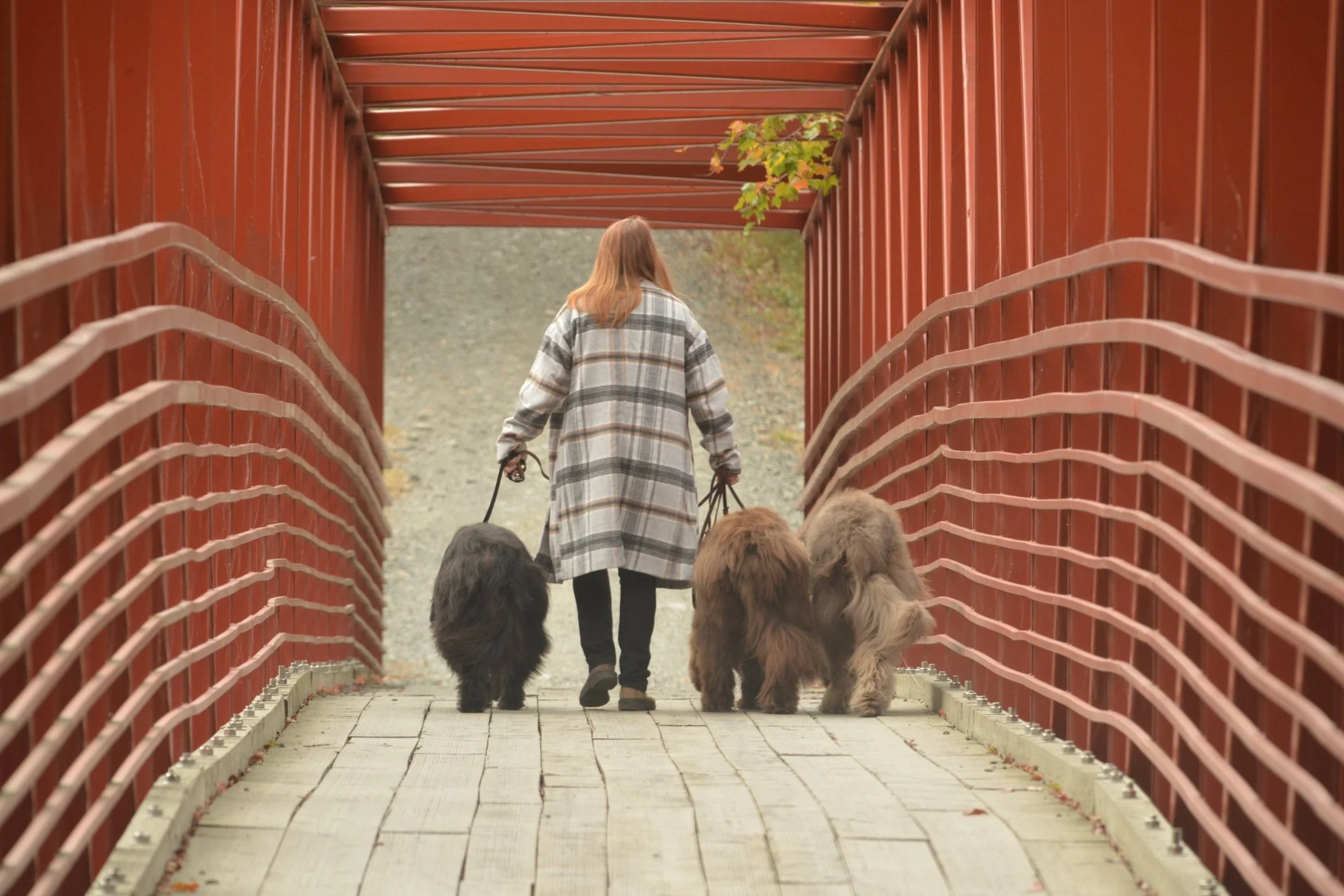
Does your dog listen perfectly at home?
You know the drill. They sit when you ask, they stay while you prep their dinner, and they might even give you that soulful "I love you" gaze from across the living room.
But then, the front door opens.
Suddenly, you’re invisible.
The environment, the squirrels, the neighbor’s lawn, that one specific blade of grass, becomes a million times more interesting than you.
You’re left standing there, holding the leash and feeling like a total sucker while your dog searches, seeks, and ignores every word coming out of your mouth.
If you’ve ever felt like you matter less to your dog than a random smell on a telephone pole, you’re in the right place.
It’s exhausting, it’s frustrating, and honestly? Sometimes it’s just plain embarrassing.
But here’s the secret: It’s not about your dog being "stubborn," and it’s definitely not because you need more obedience.
The Obedience Trap: Why More Commands Won’t Save You
Most of us have been taught that if a dog doesn't listen, we need better control.
We think we need more commands, faster "sits," or higher-value treats (hello, mountain of chicken wieners!).
But I call this the Obedience Trap.
We try to use training to control the dog’s drive instead of understanding it.
The truth? A dog can be perfectly obedient and still not feel safe.
They can know exactly what "sit" means and still feel completely disconnected from you the moment life gets a little bit "lifey."
Relationship is not a remote control. 🐾
When we try to navigate the world by just pushing buttons, sit, stay, heel, place, we are outsourcing our connection.
We’re trying to manage behaviour rather than building a partnership.
Left Brain vs. Right Brain: Why They Literally Can’t Hear You

Have you ever wondered why your dog seems to "forget" English the second you step outside?
It’s not because they’re ignoring you on purpose. It’s biology.
Think of it this way: Your dog has a Left Brain and a Right Brain.
The Left Brain is the thinking side. This is where they process "English as a Second Language." It’s where they access all those commands you practiced in the kitchen.
The Right Brain is the instinctual side. It’s driven by movement, emotion, pressure, and survival.
When your dog gets stressed, overwhelmed, or even just super excited by the environment, they shift.
They move from that calm, thinking Left Brain into the reactive, instinctual Right Brain.
And once they’re in that Right Brain space? Your commands become white noise.
They aren't "disobeying" you; they literally don't have the mental bandwidth to process what you’re saying.
Learning from Apollo: Passion and Partnership

Apollo: PitXGreyhound. Because if you ever thought you could out run a Pit… now you can’t.
I learned this lesson the hard way with my dog, Apollo.
He was a Pit Bull-Greyhound mix, a high-prey-drive athlete who lived for the chase.
Apollo drove me absolutely crazy at first. He was the dog I did the most obedience with because I thought I had to control every single movement.
But I realized that the same passion he had for chasing deer was the same passion he had for me when we were actually engaged.
When I stopped trying to use obedience as a remote control and started focusing on our connection, everything changed.
He didn't need more commands. He just needed more of me.
Shifting the Question: Connection Over Control
Next time you’re out on a walk and you feel that familiar surge of frustration because your dog isn't listening, I want you to stop.
Instead of asking, "How do I make my dog obey me right now?"
Try asking: "How can I stay connected with my dog here?"
That one little shift changes your entire energy.
It moves you from a place of "me vs. the dog" to "us vs. the environment."
It’s not about dominance; it’s about relevance.
If you want to be more important than the squirrel, you have to be a part of your dog’s world, not just a weight at the end of the leash.
How to Become a Partner in Exploration
So, how do you actually do that when life is happening all around you?
It’s simpler than you think, but it requires letting go of the need to look "perfect."
Stop checking out. Don't just scroll on your phone or stare into space while your dog explores. Be in it with them.
Join the environment. If your dog is sniffing a fascinating hole in the ground, go look in the hole! Seriously. Sniff the leaves (metaphorically... or literally, I won't judge!).
Incorporate play. Play mimics that Right Brain drive. When you learn to play with your dog in the environment, you become a part of their instinctual world.
Be the "Guide by their Side." Instead of being the person who constantly says "no," be the one who says, "Hey, look at this cool thing!"
When you become a partner in their exploration, your dog starts to look at you, not because they have to, but because you’re actually pretty awesome to be around.
Ready to Build a Real Partnership?
You don't have to do this alone. If you're tired of the "obedience trap" and ready to actually understand what's going on in your dog's head, I'd love to help.
Step 1: Discover your dog's unique personality. Take the Dogonality Quiz to see why they do what they do.
Step 2: Join us inside the Fearless Framework. It’s my 12-month program designed to help you stop surviving and start building trust and confidence.
Step 3: Just breathe. You love your dog, and they love you. The connection is already there, we just need to find it again. 🐾
Listen to the Full Episode
Want to dive deeper into why "less commands" actually leads to "more listening"? Check out the full conversation on the Beyond Obedience podcast!
Also available on Spotify!
In this episode, I talk about the "Move Your Feet" rule and why understanding the "dog-human connection" can actually give you goosebumps. (Yes, I’m that much of a dog nerd!)
I'm here for you! 👣
Tracy