What to Do When Your Reactive Dog Loses It (The Exit Strategy You Need)
Have you ever been there?
You’re out for a walk, enjoying the sunshine, and suddenly, boom.
Out of nowhere, another dog appears around the corner.
Before you can even react, your sweet dog has gone from zero to a million.
The barking. The lunging. The full "banana beans" mode chaos.
You feel the heat rise in your face. You feel the eyes of the neighbours on you.
You’re desperately trying to fix it in the moment, but nothing is working.
I want you to take a deep breath right now.
Because I’ve been exactly where you are.
I’ve done the "karate dance" where I’m hopping side to side, trying to block my dog while they’re spinning around me.
I’ve felt that pit in my stomach, wondering why yesterday was so good and today feels like a total failure.
But here’s the secret I wish someone had told me years ago:
In that moment of explosion, you aren’t failing at training.
You’ve simply moved beyond the "training" phase and into the "management" phase.
And once you understand the difference, everything changes.
The "Banana Beans" Brain: Why They Can't Hear You
When your dog is in the middle of a reactive meltdown, they aren't being "bad" or "stubborn."
Their brain has literally shifted.
Think of it like this: your dog has a Left Brain (the thinking, logical side) and a Right Brain (the instinctual, survival side).
In a calm moment, they’re in that Left Brain. They can sit, stay, and look at you for a treat.
But when that trigger hits, whether it’s another dog, a bike, or a person, they snap over into the Right Brain.
This is the instinctual side. It’s fight or flight. It’s survival.
And survival mode doesn’t have room for a "sit" command.
They can’t hear your voice, they can’t see the cookie you’re waving, and they certainly can’t "learn" anything new.
Imagine if you were terrified of spiders and someone dropped one down your shirt.
If they then asked you to solve a math problem while you were screaming, how would that go?
Exactly.
This is not a training moment.
Once you release the pressure to "fix" the behaviour in that exact second, you’ll feel a massive weight lift off your shoulders. 🐾
Your New Plan: The Graceful Exit Strategy
If it’s not a training moment, what is it?
It’s an Exit Strategy moment.
Instead of standing your ground or trying to "win" the interaction, your goal is simple:
Get out of dodge.
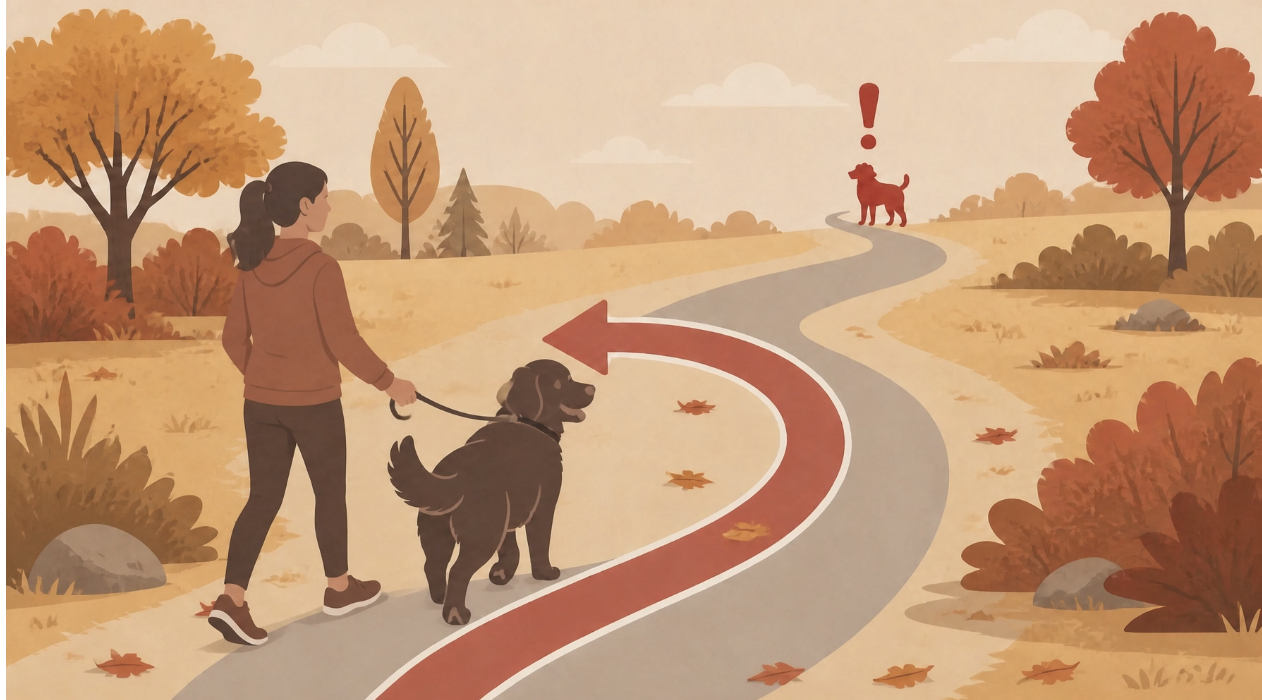
Most people stay in the moment too long.
They try to get their dog under control right there while the trigger is still passing by.
But your dog thinks their reactivity is actually working!
They think, "I barked, and that scary dog walked away. I did it! I saved us!"
Instead, I want you to try the Build Your Brave protocol:
Stop the conversation. Don’t talk, don’t yell, don’t correct.
The About-Face. Simply turn around and move in the opposite direction.
Move with intention. Don’t run away in a panic (your dog feels that!), but move with a clear "we’re going this way now" energy.
By creating space immediately, you’re telling your dog, "I’ve got this. I see you're overwhelmed, and I’m leading us to safety."
That is true leadership. It’s not about being the "boss", it’s about being the partner they can trust when the world gets scary.
Why "Sit" Might Be Making It Worse
This is where I get a little controversial (the "gentle contrarian" in me!).
We’ve all been told that if our dog is nervous, we should make them sit and focus on us.
But think about dog body language signs.
When a dog sits, they are physically more vulnerable. They can’t move quickly if they need to.
If your dog is already terrified, forcing them into a seated position while a "threat" is nearby can actually spike their anxiety.
It’s like being forced to sit in a chair while someone you’re afraid of walks toward you.
You don’t want to sit; you want to be ready to move.
Instead of demanding a stationary command, focus on movement.
Movement helps process adrenaline. It helps shift the brain back to you.
Save the "sit" for when they’re calm and at home. Out there? Just focus on the connection. 👣
The Recovery Phase: Finding Each Other Again
Once you’ve successfully exited the situation and found a quiet spot, the work isn't quite over.
Now, we focus on how to calm an anxious dog through connection.
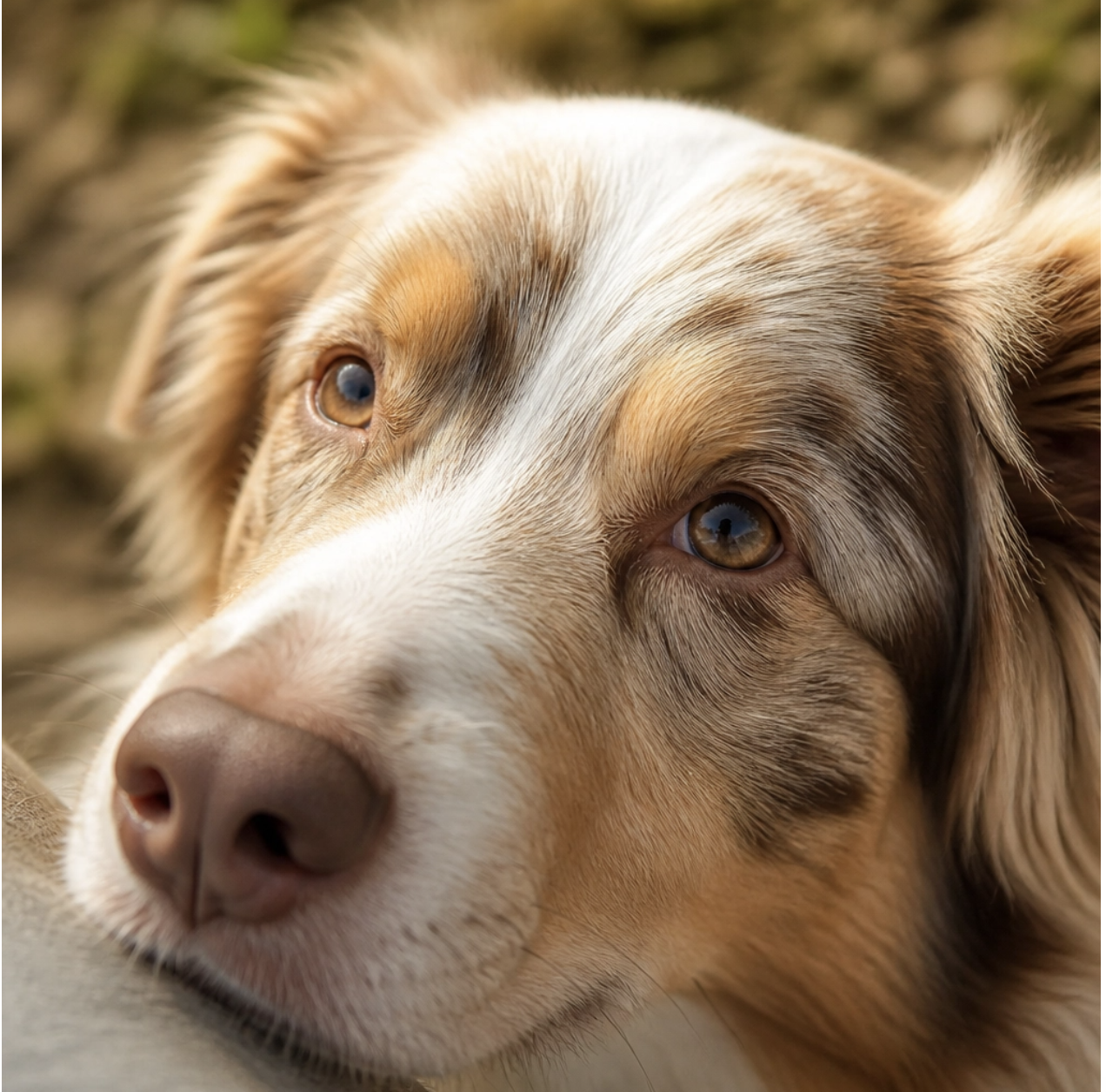
You’ll know they’re coming back to you when you see their eyes change.
During a reaction, their pupils often dilate, and they look "glassy" or intense.
As they calm down, you’ll see those pupils return to normal. They’ll take a big breath (often a "shake off").
That is the moment they’ve re-entered their Left Brain.
This is when I like to use hand gestures instead of loud commands.
Take a deep breath yourself.
Ask for a simple "follow me" movement.
Check in with them. “Hey, you’re back. I’m here.”
You lost the connection for a minute there, and that’s okay. Recovery is all about getting that connection back so you can finish your walk in peace.
Moving From "Referee" to Partner
Handling a reactive dog is exhausting. It’s emotional. It can feel like you’re constantly "managing" a ticking time bomb.
But I promise you, you aren't alone on this journey.
If you're tired of guessing what to do and you want a bestie to help you build these protocols step-by-step, I’d love to invite you to join us in the Fearless Framework.
It’s a space where we stop focusing on "fixing" and start focusing on trust, partnership, and understanding.
We work on identifying those subtle dog body language signs before the explosion happens.
We learn to read our dogs so well that they start looking to us for guidance instead of reacting to the world.
Imagine walking down the street, seeing another dog, and having your dog look at you as if to say, "Hey, do you see that? We're good, right?"
That’s not a pipe dream. It’s the result of building a life beyond obedience.
Ready to take the first step?
Step 1: Download our guide on Reactive Dog Training tips.
Step 2: Listen to the full Episode 204 on the podcast.
Step 3: Join our Living Beyond Obedience Facebook Group to meet other dog lovers walking the same path.
You’ve got this, and I’ve got you.
Be the person your dog thinks you are today. (Because they think you're pretty amazing.)
Here for you! 🐾
Tracy